Reviews

Stolen Whiskey Review


Stolen Spirits, known for their smoked rum, are releasing their first whiskey.  Stolen Whiskey starts as an 11-year-old whiskey “distilled and aged right outside whiskey’s Kentucky heartland.” I do wish STOLEN was a bit more transparent with where they sourced this whiskey, but we are where we are.  This whiskey is then re-barreled with toasted barrel staves.  There’s no word on how long the secondary maturation period is.  The final whiskey is bottled at 46% abv, or 92 proof.

How is it?

The rich nose features a deep, dark caramel base with hints of furniture polish, espresso and nutmeg.  Taste-wise, the smoked oak staves barrel finish add burnt caramel and slightly bitter barrel char to a bed of Mexican chocolate, sweet vanilla cream, orange peel, and baked banana.  The medium finish leaves a bananas foster note and a hint of smoked oak on the tongue.

This is an interesting whiskey.  It sits mainly in the dark caramel/dark roast coffee area of the flavor spectrum, thanks to the smoked oak stave finishing.  And because of how much that that flavor profile dominates, I have to believe the secondary maturation lasts a relatively long time.  That, or the the base whiskey is bland to start with and the smoked staves add a lot of flavor fast.  Stolen Whiskey has a creamy mouthfeel and nice flavors, but sometimes seems like a bit of a one-trick pony.  That’s not necessarily a bad thing, if you know what you’re getting here.  It’s not a complex whiskey to sit and contemplate for an hour.  I have a feeling this whiskey is designed with the cocktail market in mind.  I made an Irish coffee, but substituted Irish whiskey for Stolen whiskey.  The results were pretty damn good. Stolen Whiskey is scheduled to hit shelves in March. 7/10

Thanks to Stolen Spirits for the sample.  As always, all thoughts and opinions are my own.

That Time I Helped Pick a Batch of Booker’s Bourbon

Since starting this blog years ago, I’ve had the pleasure of experiencing many whiskey geek moments.  I count myself very lucky.  The most recent of these was the opportunity to take part in a Booker’s Roundtable tasting.  Every so often, Jim Beam Master Distiller (and Booker Noe’s son) Fred Noe will gather with a handful of whiskey writers, enthusiasts, experts, and friends to pick out the next batch of Booker’s Bourbon.  Booker used to pick batches of his namesake bourbon with friends, and I’m glad to see the continuation of that tradition.  This Roundtable consisted of Chuck Cowdery, Lew Bryson, F. Paul Pacult, Nino Marchetti, Blake Riber, John McCarthy, Jack Robertiello, and myself.  Batch 2017-01, or “Tommy’s Batch,” is named after a 30+ year distillery employee and close friend of Booker’s who helped Booker with his barrel picks.  He was also on the call.

Doing a little pre-call tasting of both batches.

Regular readers of this blog, and anyone within earshot of me, know I consider Booker’s the best whiskey in the standard Jim Beam lineup.  I find it much more balanced than the older Knob Creek, which is also delicious but carries an oak-forward flavor profile.  Booker’s was on bourbon lover’s radars recently with an announced price increase that takes effect with this very batch of Booker’s I am helping to select.

How does the Booker’s Roundtable work?  Those selected will meet in person in Kentucky or via a conference call.  The latter is the case for this particular Roundtable selection.  The distillery usually sends three samples to each participant.  The samples are different batches of Booker’s, each with slight differences.  Fred leads a tasting and shares some production notes.  Our job is to taste each sample and pick the one we believe tastes most like Booker’s.  The batch with the most votes then gets bottled and goes to market.

This Roundtable selection was a touch different.  Participants only received samples from two batches of Booker’s instead of three.  Noe said the reason for that was a shortage of barrels of age needed to craft batches of Booker’s.  He also mentioned it’s why Beam is only releasing four batches instead of the usual six this year.


The breakdown of the two samples is as follows:

Batch A is 128.2 proof.  335 barrels came from two different production dates (January 2009 & July 2010) and three different warehouse locations:

  • 41% came from the 6th floor of warehouse E
  • 13% came from the 6th floor of warehouse H
  • 46% came from the 7th floor of warehouse D.

Batch B is 124.1 proof.  Barrels came from 5 different production dates (January 2009 & January – October 2010) and 4 different warehouses:

  • 7% came from the 5th floor of warehouse H
  • 19% came from the 4th floor of warehouse F
  • 18% came from the 5th floor of warehouse D
  • 18% came from the 5th floor of warehouse F
  • 38% came from the 4th floor of warehouse E

Both were great tasting bourbons.  While I found Batch B to be a touch more balanced but slightly muted, Batch A hit it out of the park.  With the exception of one participant, everyone (even Tommy) decided Batch A made for a much better batch of Booker’s – a big, rich, robust “back alley bruiser,” as someone on the call eloquently described it.

“Tommy’s Batch” is due to arrive on shelves in late February/early March.

Thanks to the folks at Beam and Multiply for inviting me to take part in the Booker’s Roundtable.

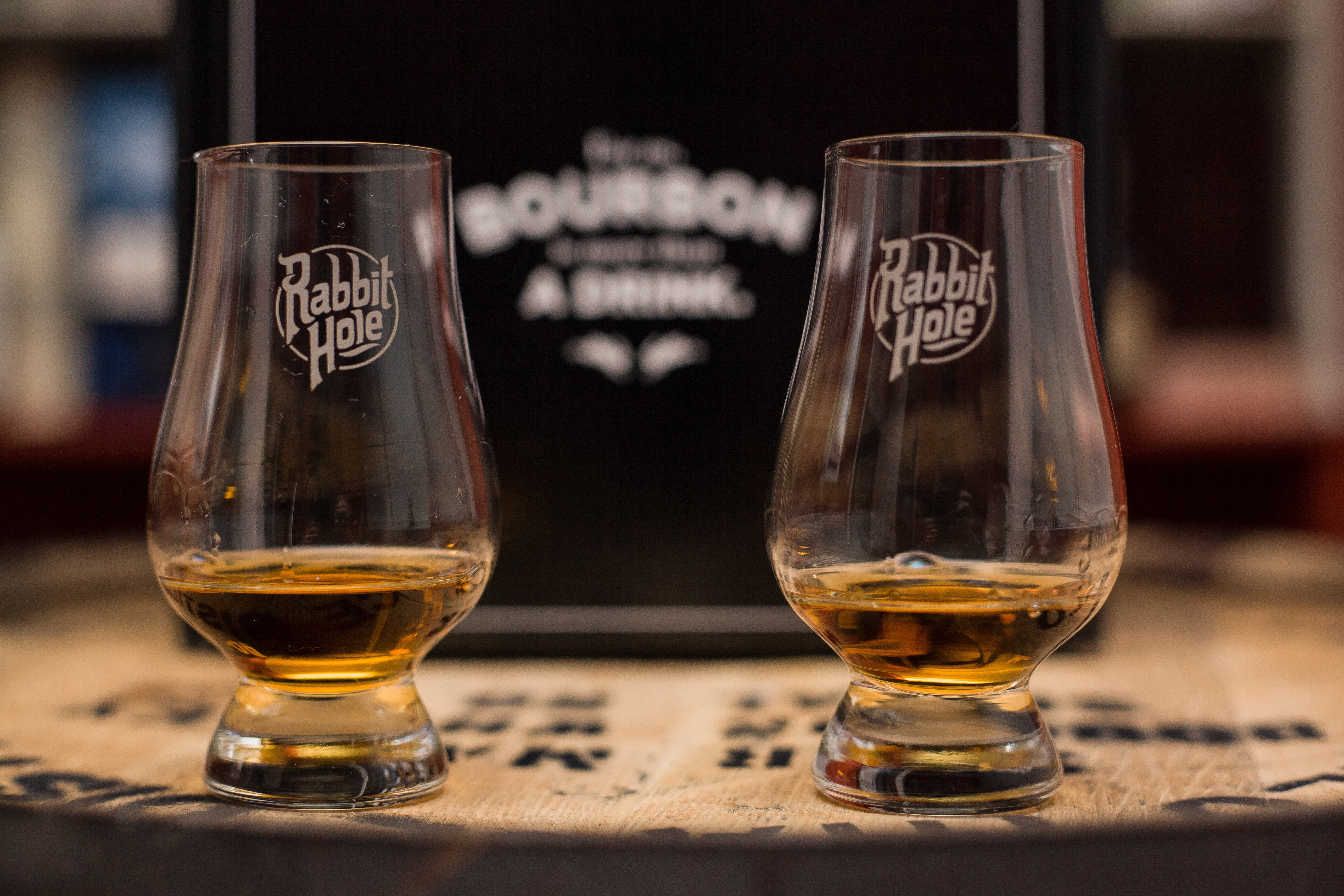
Rabbit Hole Distilling Bourbon and Rye Whiskey Review

Rabbit Hole bourbon and rye whiskey.


In 2012, former psychoanlayst Kaveh Zamanian founded Rabbit Hole Distilling.  With the help of collaborators like Larry Ebersold, former Master Distiller of Seagram’s, Zamanian began production of his whiskies.  Being such an odd mash bill, it’s highly likely they contract distilled these whiskies at other distilleries.  Their own distillery broke ground last year, and should be operational by Fall 2017.  They’ve named Cameron Talley head distiller, so he’s in charge of overseeing production. 

So, how are the whiskies?

Let’s start with their bourbon.  It’s made up of four grains: 70% corn, 10% malted wheat, 10% malted barley, and 10% honey malted barley.  The entry proof, which is the proof of the whiskey as it enters the barrel, is 110 proof.  It’s lower than the industry standard 125 proof.  This bourbon has matured for 2+ years and has been bottled at 95 proof.  On the nose, there’s a “green” quality, but that’s to be expected in such a young whiskey.  I pick up hints of toffee, nuts and herbs (especially basil), along with a touch of vanilla.  The palate is rich, thanks to the low entry proof, featuring notes of honeyed grain, yogurt parfait, and caramel alongside some spice and vanilla.  The medium finish features lingering a great spiced caramel apple note. 8/10

Rabbit Hole’s rye whiskey consists of 95% rye and 5% malted barley.  That should sound familiar, as it’s one of the popular rye mash bills from Indiana’s MGP distillery.  However, this whiskey comes from Kentucky.  Like the bourbon, the entry proof here is also 110 proof.  The 2+ year age statement and 95% bottling proof also carry over.  The nose is sharp and herbaceous, with hints of toasted rye bread, dill, and light brown sugar.  Taste-wise, rye spice quickly builds up, followed closely by caramel, baking spice and Honey Nut Cheerios.  The finish is slightly longer than the bourbon, and leaves behind a mint julep (mint, caramel) note.  7.5/10

Impressive.

I like what Rabbit Hole is doing here.  Not only do these whiskies show a lot of promise at such a young age, they’re quite rich and enjoyable as is.  That said, I’m curious to see how they would taste after a few more years of maturation.  Recommended.