From Grain to Glass: A Visit to Frey Ranch Distillery

Distillery owner Colby Frey in his rye field. Frey Ranch grows several grains on the estate.


About an hour east of Reno, a most exciting craft distillery lies in the sleepy farming town of Fallon, NV:  Frey Ranch Distillery.  Run by husband and wife team Colby & Ashley Frey, the distillery is smack dab in the middle of their large farm estate.  

The Freys have called Nevada home since before it became a state.  In fact, Colby’s great-great-grandfather filed one of the first land claims in the area.  Farming is the family trade.  It’s in their blood.  Multi-generational business history is one of the big pushes for some Kentucky distillers, and it is the same for the Freys when it comes to farming.

The Freys do everything on their estate, from growing grains to bottling.


“It helps, through generations and  through trial and error, to learn the best way to grow grain and other products in the desert of the driest state in the nation,” said Colby Frey.  “Now we have this unique ability to grow the grain in this atmosphere which is totally different than anywhere else in the world.”

Back in 2001, Colby and his father, Charles Frey, Jr., started growing vines and making wine.  He enrolled in several fermentation and wine-making classes, and took the time to practice and experiment.  “What’s neat about being a farmer is you have to know a little bit about a lot of things,” Colby said.  A jack of all trades, so to speak.  
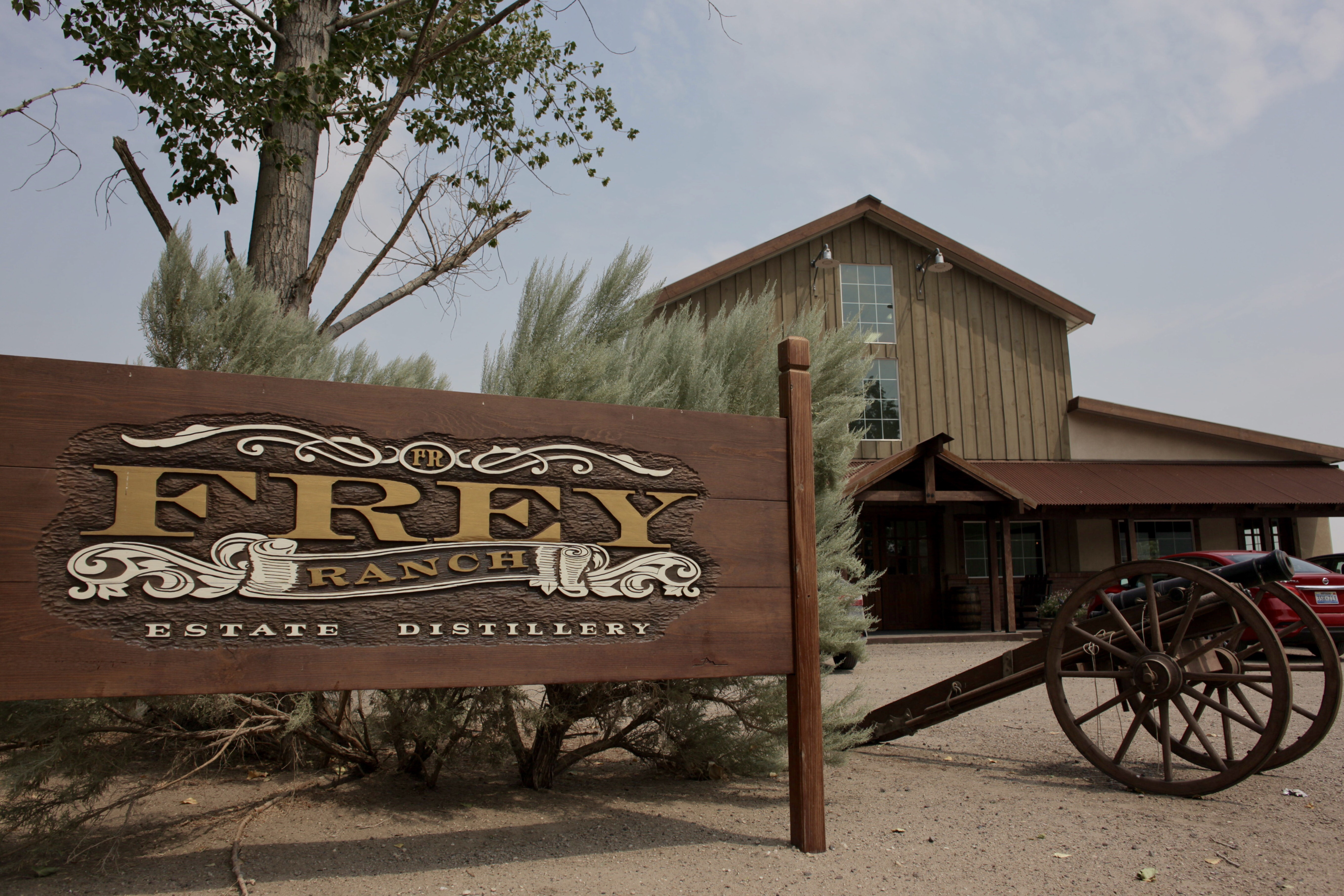
Frey Ranch Distillery is about a hour’s drive from Reno.


Distilling soon followed.  Grappa and brandy were the first spirits distilled at the estate, which makes sense given their wine-making proclivities.  The 50-gallon still used at the time was handmade by Colby, but that would change when they decided to expand their distilling capabilities.  Now, they are rocking custom-made Vendome stills.  Located in Louisville, Vendome Copper & Brassworks is the go-to still maker for a lot of American distillers.  With the new equipment in place, the Freys have the capacity to produce 10,000 cases of distilled spirit a month.


Years later, the first whiskey the Freys distilled and put to rest was bourbon.  That bourbon comes from a four grain mash bill – corn, rye, wheat and barley.  At the moment it’s about two and a half years old, but the Freys made one thing clear:  they will not sell a whiskey younger than four years old.

“Right now it shows extreme potential.  When we try it at four years, if we think it needs more time, we’ll let it age,” Frey explained as we tasted their bourbon.  I have to say, it’s pretty enjoyable at the moment.  Being such a young age, the bourbon is grain forward, but not sharp.  Instead, like the majority of the other whiskies I sampled at the distillery that day, I found it rich and flavorful with lots of vanilla and light caramel.
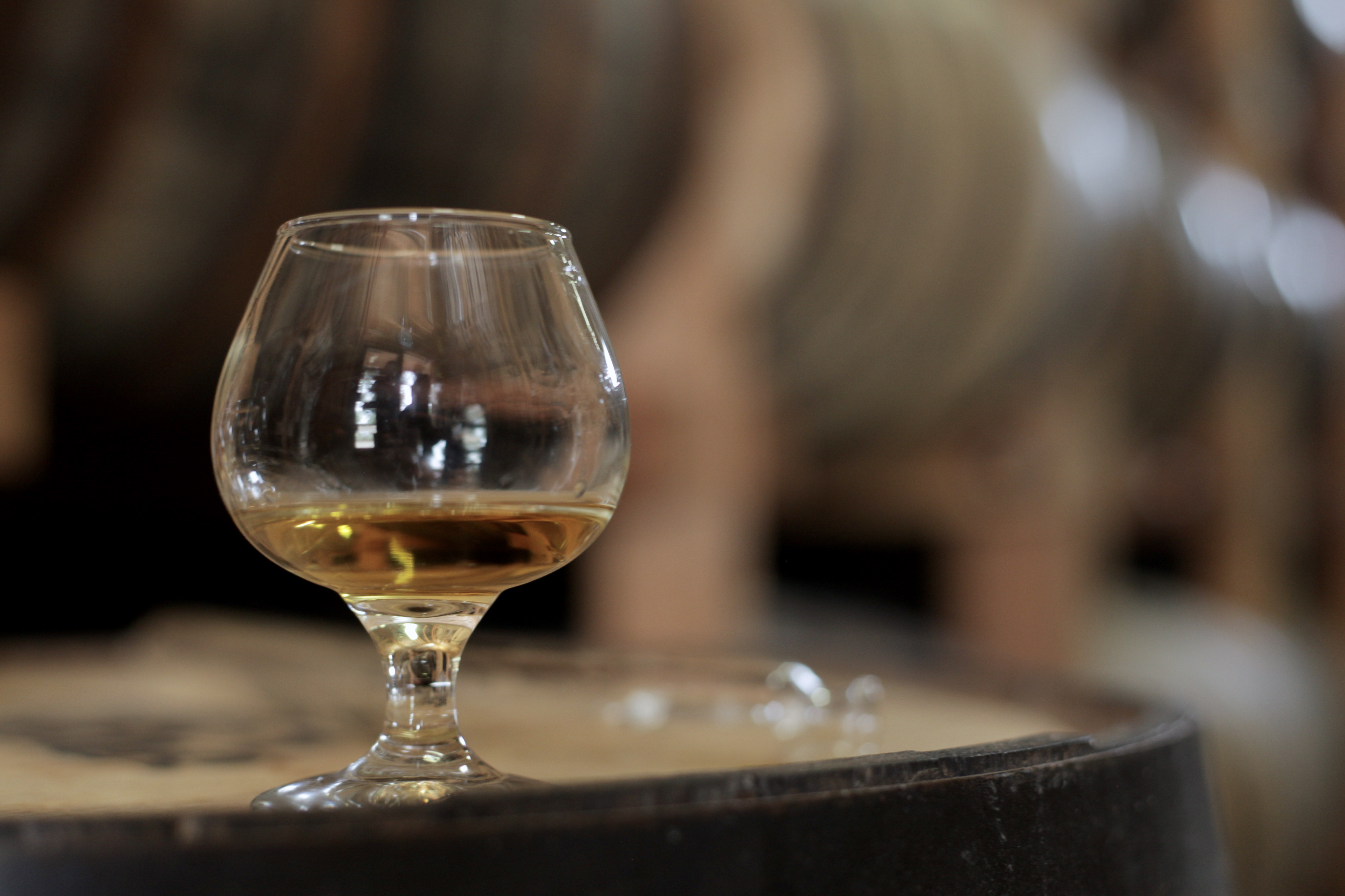
Colby and Ashley Frey say their bourbon shows “extreme potential.” I’d have to agree.

Only grains grown on Frey Ranch Estate are used in production of their spirits.  Grain-wise, the Freys are growing corn, wheat, rye, barley, and oat on their farm.  That, and the fact that Colby likes to tinker and experiment, allows for the production of other whiskies.  In addition to bourbon, the Freys have distilled a rye whiskey, wheat whiskey, oat whiskey, malted corn whiskey, and malt whiskey.  That last one has a light peating level.  What’s interesting is the peat is made on the estate from decomposed corn stocks.  

In addition to their more traditional bourbon, a unique bourbon is also aging in the warehouse.  For this particular whiskey, the four grains used in their standard bourbon – corn, rye, wheat, and barley – are all malted on-site and used in the mash bill.  A malted bourbon?  I wasn’t sure what to call this whiskey, but it’s just bourbon (thanks for the insight, Chuck).  Compared to their more traditional bourbon, this whiskey is still fairly young and has a long maturation ahead of it.  The whiskey itself was rather interesting.  I mean that in a good way.  It had an earthy quality their standard bourbon didn’t have.

Having sampled their range of whiskies, I found that none had that “green” taste.  You know, that young, brutish, sharp character found in a lot of craft distillery whiskies.  Even though most were still very young, the whiskies had backbone.  That can be attributed to the attention and care in not only in the fermentation and distillation of the spirits, but also to the generations of know-how the Freys have instilled in their farming techniques.


Everything comes from and is done at the estate.  Everything.  Growing grains, malting, fermenting, distilling, maturing, and bottling – everything.  I’ve never seen anything like it, and I can’t help but appreciate the conviction with which the Frey family are approaching the distillation of spirits.

“There’s a saying in the wine industry that you gotta like what you make because you might end up drinking it all yourself.  So we want to make sure we like it before we bottle it.  We don’t want to do anything to even remotely sacrifice our reputation for having quality products.”

The distillery trip was entirely paid for by Frey Ranch Distillery.  Thanks to the Freys and Argentum for the wonderfully educational weekend in Reno.  As always, all thoughts and opinions are my own.
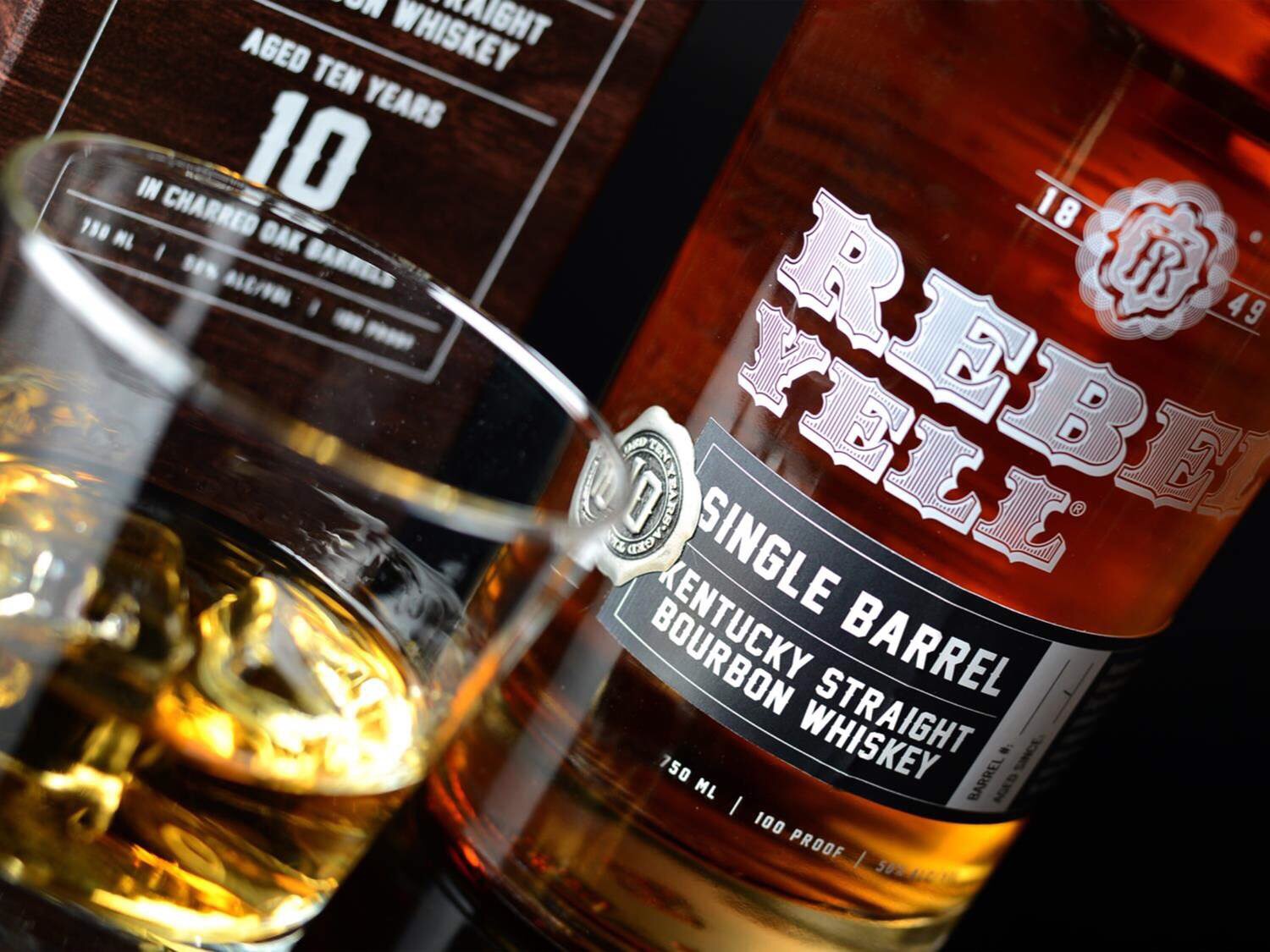
Rebel Yell Single Barrel (2017) Bourbon Review

Photo courtesy of Luxco.


The second release of Rebel Yell Single Barrel is already on shelves.  It launched in 2016 and quickly became one of my favorite bourbons released that year.  A 10-year-old, 100 proof wheated bourbon for about $60- seriously, what’s not to like?

As I just mentioned, Rebel Yell Single Barrel is a wheated bourbon.  That means the producers use wheat as the secondary grain instead of the more traditional rye.  Speaking of producers… though Luxco is currently building a distillery in Bardstown, they are still sourcing their whiskey from other producers.  In the case of most of Luxco’s whiskies, that source would most likely be Heaven Hill.

My review sample is from barrel 504315, which was filled in May 2006.  I said it before and I’ll say it again: kudos to parent company Luxco for adding this information to the label.

I’m happy to report the quality of last year’s release remains.  Big aromas of grilled sweet corn, caramelized sugar and vanilla fill the glass.  Slight hints of cinnamon and fresh brioche follow.  On the palate, classic bourbon notes are showcased – vanilla cream, cornbread, and cinnamon. A touch of leather and oak tannins lightly coat the tongue in the back palate.  The finish is long and somewhat sweet, with notes of spiced corn and caramel.

I enjoy bourbons of many walks of life.  Lately I’ve come to consider 8 to 12 years to be my sweet spot in terms of a bourbon’s age.  Heaven Hill’s 10-year-old Parker’s Heritage Collection from a couple of years back is pretty much a flawless bourbon for my tastes.  Barrel Bourbon Batch 005 was aged for eight years and still lingers in my memory.  Rebel Yell Single Barrel, though a different mash bill, hits on all cylinders.  It is extremely well-balanced and delivers a wonderful display of flavors.  8.5/10

Rebelyellbourbon.com

Thanks to Luxco for the sample.  As always, all thoughts and opinions are my own.

A Word With Freddie Noe and a Little Book Preview

Image courtesy of Beam Suntory.


For the most part, I’ve quite enjoyed the whiskies that came from the hands of the late Booker Noe and his son Fred Noe – the current Jim Beam Master Distiller.  So it is with great anticipation that I get to preview THE debut whiskey from the eighth generation Beam, Freddie Noe.

Little Book, both the name of the whiskey and Freddie’s nickname, is scheduled to hit shelves this October.  This first batch, “The Easy,” is a blend of 13-year-old corn whiskey, 5-year-old rye whiskey, 5-year-old malt whiskey, and 4-year-old bourbon.  The ages of the component whiskies come courtesy of an informative article from writer Chuck Cowdery.  I’m being told by the company that the component malt and rye whiskies, once batched and bottled in the fall, will be “about 6 years-old each.”

So no, it’s not a bourbon.

Think of it as deconstructed bourbon.  The major grains of the component whiskies (corn, rye, and malted barley) are ones found in the traditional bourbon mash bill.  Cowdery also states in the aforementioned article that though Little Book is a blended whiskey, it contains no grain neutral spirit or flavoring.

Noe’s plan is to release a different blend each year.  He gets to experiment and has no shortage of barrels to play with.  In the tradition of his late grandfather’s namesake Booker’s, Little Book is uncut and bottled at barrel strength.  This sample I have is 120.48 proof.  As the whiskies are still in barrels and not yet batched together, the proof may slightly change.

Recently, Freddie Noe was kind enough to answer a few questions I threw his way.

BC: Freddie, let’s start with the name ‘Little Book.’ Tell us the story.

FN:  Little Book was my childhood nickname given to me by my family. It’s a nod to my granddaddy Booker Noe because people always thought we were just alike. I figured it was the perfect name to give my first release and pay tribute to my family.

BC:  How has your grandfather and father influenced your first whiskey release?

FN:  My Dad and my granddaddy are two of my biggest inspirations. I’ve always admired them for their character, and of course, their leadership in the bourbon industry. When I started working down at the distillery, I realized that my granddaddy and I had even more in common than I originally thought. Granddaddy was known for his spirit of experimentation, and when I started tinkering with whiskey myself, it awakened a real passion. For me, I love blending and the limitless taste profiles that can be created, and I knew that would be the foundation for my first release.

When I set down the road to bring Little Book to life, I tried to take into account all the lessons I’ve learned from my family over the years and during my time working with my dad at the distillery. Dad was one of the few who tasted Little Book before it was finished, and it’s being bottled uncut and unfiltered which I know is how granddaddy liked it too. Releasing Little Book is a big honor and responsibility, and I hope I’ve made the family proud.

BC:  This is the first high profile blended whiskey released by a major producer in a long time. Why blends of different types of whiskies instead of just a bourbon or rye release?

FN:  I’ve had just about every job at the distillery, but it was when I was working in our Global Innovation Center that I realized that I have a curious palate and a real fascination with blending. It’s like an open canvas. When you find just the right mix of liquids and blend them in the right amounts, you can create something that no one has tasted before.

When I was creating the liquid for Little Book “The Easy,” I wanted to pay tribute to what us Beams are known for – bourbon, and the core grains that make up a traditional bourbon mashbill. I blended corn, rye and malt whiskies together with Kentucky straight bourbon in varying proportions until I got the blend just right. The liquid streams in Little Book “The Easy” have been blended to create a taste profile that’s unique and one-of-a-kind.

BC:  Did you have an idea in mind of what you wanted when you set out to start this project, or did it evolve in the process?

FN:  I’ve been thinking about this product for a while now – it’s actually been years in the making, so when I got approval to create it, I was ready to get to work. It was a labor of love. I actually decided on the recipe for this blend on the second try, but it took me making more than 25 blends over the course of the last year until I decided the final liquid was just right.

Of course, Little Book will continue to evolve with a new blend being released each year. I’m excited to keep exploring all the possibilities with blending spirits and share some really unique liquids with whiskey fans in the coming years.

BC:  What do you think your grandfather would say after tasting this whiskey if he were still with us?

FN:  Well that’s the thing with my granddaddy – he’d tell you exactly what he thought, whether he liked it or not! But I like to think he’d be really proud and tell me “you done good!” To him, whiskey was meant to be drank however you liked it best, and in making Little Book uncut and unfiltered, you can do just that – you can drink it neat, with ice or even a little water. I like to think he’d add a couple drops of water to Little Book “The Easy” and enjoy it out on his porch swing.


As for the whiskey itself, the corn whiskey dominates.  Rich buttered kettle corn is the first aroma out of the glass, with a sprinkling of baking spices (most notably cinnamon stick) and a splash of maple syrup & butterscotch following closely.  The nose is a tad closed off, something remedied with a splash of water.  The whiskey is chewy (like great batches of Booker’s) with initial hints of butterscotch hard candy and sweet buttered cornbread, along with cinnamon, cloves, and some rye grain and nuttiness.  A bit of oak tannin appears on the backend into a long finish, with a hint of charred caramel corn.

It’s an interesting flavor profile, both reminiscent of classic bourbon and a complex corn whiskey.  I like what’s going on in the glass.  Little Book stands out as something a little different than a standard Beam bourbon.  Kudos to Freddie Noe for putting together a solid first release.  Fred, Freddie’s dad, should be proud.  8/10

Note: Updated on 8/11/17 to clarify the age of the component whiskies and proof of the final batch.