bourbon review

Basil Hayden’s Bourbon Whiskey Review

IMG_3517

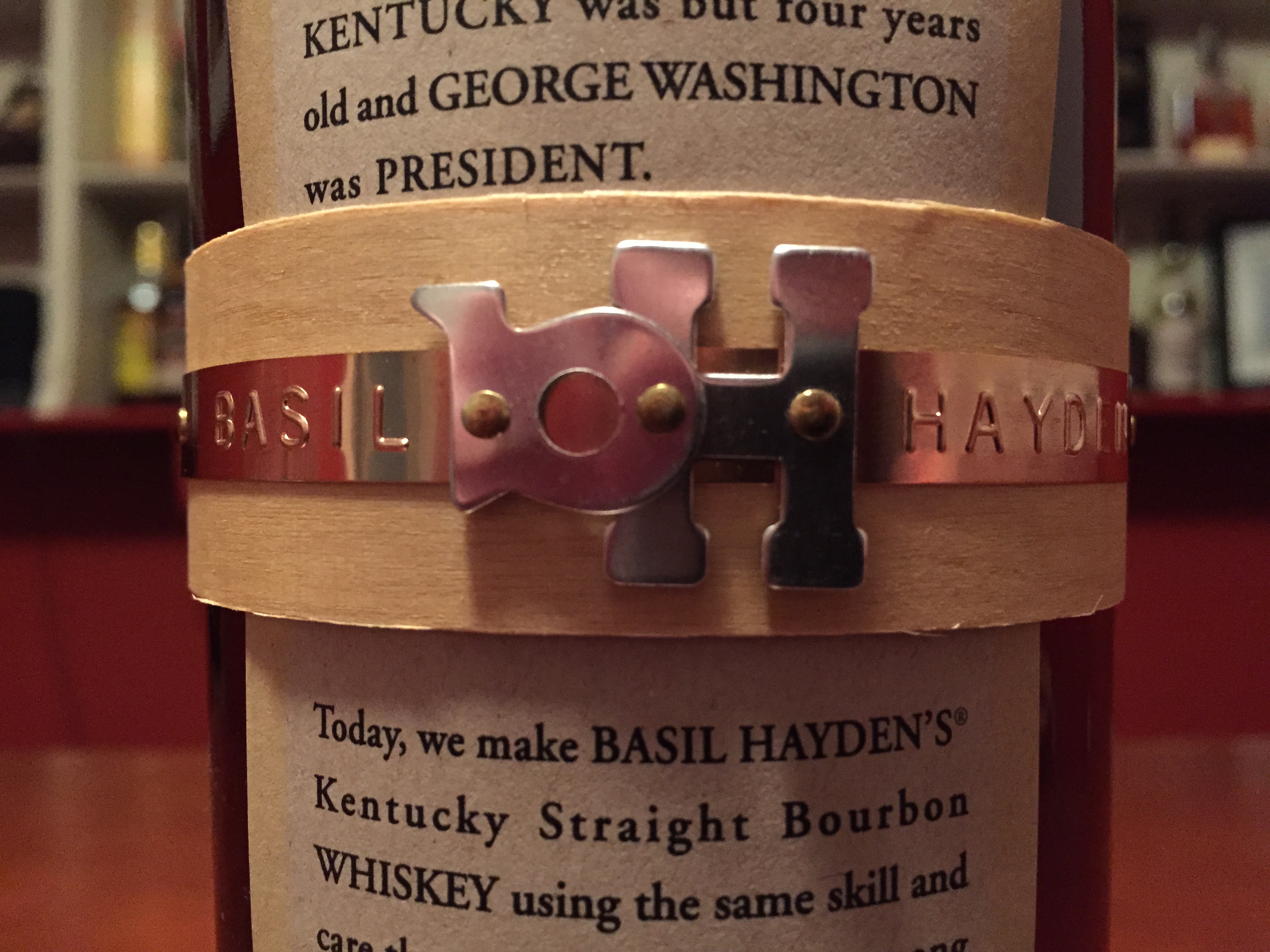
Who the heck is Basil Hayden?  In a nutshell, he was a distiller in the 1700s who led several families to settle at Bardstown, KY.  He also liked a higher percentage of rye in his whiskey.  Now, let’s talk about Basil Hayden’s bourbon.  I’ve wanted to try this bottle for a long time.  Maybe the elaborate packaging got to me?   I’m a sucker for great packaging, but if the whiskey inside the bottle isn’t good then a nice label really doesn’t matter.  After all, a bottle of bourbon isn’t shelf decoration – it’s for drinking.

Before we get to the tasting notes, let’s examine this bourbon a little.  Basil Hayden’s uses Jim Beam’s high-rye mash bill.  It shares DNA with Old Grand Dad, Jim Beam Rye, and (ri)1.  A little tidbit – Basil Hayden is pictured on the bottle of Old Grand Dad. Also of note is the age statement, or lack thereof.  It’s the only member of Jim Beam’s Small Batch Collection that doesn’t carry an age statement.  Basil Hayden’s used to be aged 8 years.  Now, it’s “artfully aged.”  My assumption is the distillery is using younger whiskey while trying their best to keep the flavor profile of this whiskey the same.
IMG_3512

(The distillery’s PR firm provided a review sample.)  On the nose, I get a little rye spice, some light caramel, slight oak and even a little mint.  Taste-wise it’s got a pretty light body.  Could be because of the low proof (80 proof).  Basil Hayden is not too sweet.  I get some of that rye spice and a little black pepper.  There’s also a slight bit of oak.  The best way I can describe the finish is crisp & dry.

Basil Hayden’s is James Bond’s bourbon of choice… as per Carte Blanche, a 007 novel from 2011.  If it’s good enough for James Bond, it’s good enough for me.  Seriously though – Basil Hayden is a nicely spiced, light whiskey. It’s not as complex as Four Roses Small Batch.  Maybe that’s not a fair comparison.  They are both light whiskies, but complete worlds apart in terms of flavor.  I haven’t mixed Basil Hayden in a cocktail yet, so I can’t recommend anything other than drinking it neat at the moment.  Ice and water completely drown the flavors in this one.  It’s that light.  A bottle will cost you about $40.  A little over-priced, but a nice spring-time sipper nonetheless.

7.5/10
Booker’s Bourbon Whiskey Review

IMG_3472

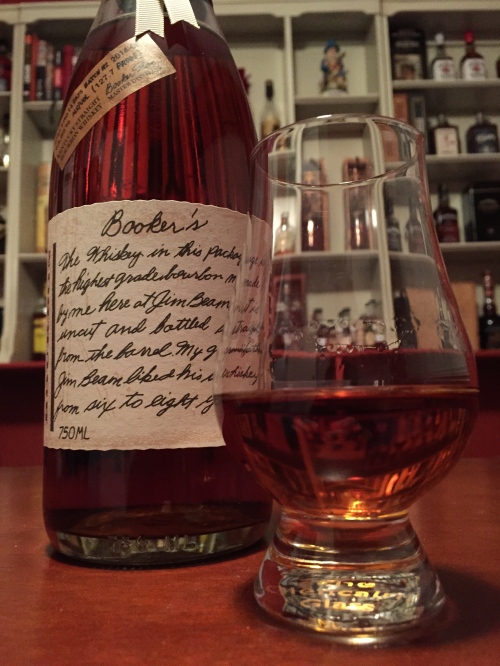
I first tried Booker’s about 3 or so years ago.  It was the first barrel-proof bourbon I tasted.  I remember thinking, “Hell, this is hot!”  A few years and a few barrel-proof bourbons later,  I bought a bottle of Booker’s 25th Anniversary early 2014 and loved it.  That left me wanting to try a normal batch of Booker’s again.  With the 25th anniversary release being so good, how does a normal batch of Booker’s bourbon compare?  Read on.

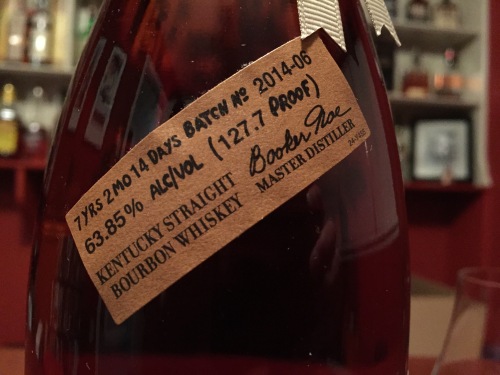
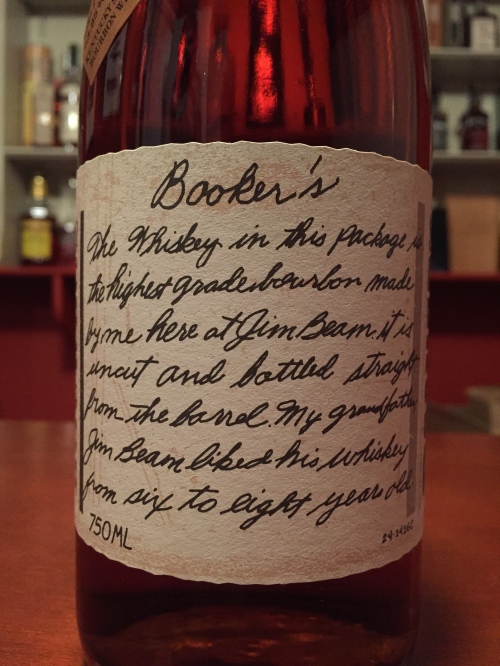
Jim Beam releases several batches of Booker’s each year.  Each one is slightly different in age and proof.  Booker Noe, the former (and now passed) master distiller at Jim Beam who first released this in the late 1980s, loved his bourbon to be aged between six and eight years.  The releases of Booker’s tend to live within that range.  Booker’s is barrel-proof, uncut and unfiltered.  This batch (2014-06) is 7 years 2 months and 14 days old, and comes in at 127.7 proof.  Booker’s is part of Jim Beam’s Small Batch Collection, a premium line of bourbons that also includes Knob Creek, Baker’s and Basil Hayden. (The distillery’s PR firm provided this sample for review.)

IMG_3470

Right out front I get a really robust aromas.  Caramel, oak, orange peel, vanilla, ripe banana.  On the palate there is lots of caramel and sweet oak.  There’s a slightly herbal quality… mint maybe?  I also get a little cinnamon spice.  The finish is sweet and long, with a little spice.  Afterwards, there’s a slight bit of dry oak.  Let’s compare to the 25th anniversary:  that one is a bit more vanilla and oak forward, and seems a little more elegant (not a term I’d normally use for a barrel proof bourbon) compared to this.  As of this writing, your chances of finding a bottle of Booker’s 25th are slim to none.

IMG_3471

This is one outstanding bourbon.  It’s got all the classic bourbon flavors I love turned up to 11.  The high proof on this release adds to the robust nature of the bourbon instead of detracting.  I find it completely drinkable, even at such a high proof. Sure, some folks will have a hard time with bourbon proofs north of 100.  To those people I’d suggest a splash of water.  A bottle of Booker’s will run you just north of $50.  I think every bourbon collector should have a barrel proof bourbon in their collection.  Thankfully, this one is readily available on store shelves.  Recommended.

8.5/10

Buffalo Trace Experimental Collection – Warehouse Floors Experiment Review

IMG_3461

Buffalo Trace’s latest release in their Experimental Collection looks at the aging process using their wheat bourbon mash bill.  It’s the same mash bill as W.L. Weller and the Van Winkle bourbons.  From their press release:

The Warehouse Floors Experiment was started in 2001, when Buffalo Trace filled 15 barrels with their Wheat Bourbon Mash Bill and placed five barrels on floors one, five, and nine of Warehouse K. This brick warehouse has nine wooden floors in total and was chosen for this experiment due to the variety of tastes it provides during the aging process.

Buffalo Trace Distillery sent me a sample of each.  Here’s how the three bourbons panned out:

FIRST FLOOR

nose:  soft caramel,  slight fruit (maraschino cherries),  surprisingly very little oak

palate:  toffee, caramel, butterscotch, a little fruit

finish:  short & sugary sweet

FIFTH FLOOR

nose:  slight oak,  caramel.

palate:  soft entry followed by caramel, cinnamon, slight oak

finish:  nice and balanced.  Not as sweet as the first floor…  almost bittersweet.  Slightly drier and a tad spicier.  Very nice.

NINTH FLOOR

nose:  sweet oak, caramel, vanilla, smells a bit more robust

palate:  a lot of oak,  sweet (caramel) and a little nutty

finish: dry and spicy

The first floor was not a spicy whiskey.  It was a nice combo of butterscotch, caramel, and fruit.  The fifth floor introduced oak.  It makes a cameo, but wasn’t the star of the show.  It was also slightly spicier than the first floor.  The ninth floor is an oakier and drier whiskey.  The sweetness and oak went back and forth and never really meshed for me.

Also of note is the evaporation differences between the floors, especially compared to a similar earlier experiment using their rye bourbon mash bill.  According to Master Distiller Harlen Wheatley, “we noticed a higher evaporation rate on the wheat recipe experiment vs the rye bourbon recipe experiment.  The wheat evaporated between 42-51% over the twelve years, depending on what floor the barrel was aged.  The rye experiment evaporated between 25-49% over the twelve years, with significantly less on the lower floors.  This higher evaporation rate is expected in wheated recipes, but it’s interesting to see it up close with the rye experiment.”

As always, the Experimental Collection is a limited, one-time release.  A 375ml bottle will run you about $46.  This is a great examination of the influence the aging location of a bourbon has on its final flavor. These barrels filled with the exact same distillate sat feet apart from each other and end up as completely different whiskies.  I’d suggest you pick up a bottle of each to taste the differences for yourself, which is what I think is the heart of this release.  However, if you’re in the market for one bottle, I’d stick with the fifth floor.  Highly recommended.

9/10