Bourbon

Buffalo Trace Experimental Collection – Warehouse Floors Experiment Review

IMG_3461

Buffalo Trace’s latest release in their Experimental Collection looks at the aging process using their wheat bourbon mash bill.  It’s the same mash bill as W.L. Weller and the Van Winkle bourbons.  From their press release:

The Warehouse Floors Experiment was started in 2001, when Buffalo Trace filled 15 barrels with their Wheat Bourbon Mash Bill and placed five barrels on floors one, five, and nine of Warehouse K. This brick warehouse has nine wooden floors in total and was chosen for this experiment due to the variety of tastes it provides during the aging process.

Buffalo Trace Distillery sent me a sample of each.  Here’s how the three bourbons panned out:

FIRST FLOOR

nose:  soft caramel,  slight fruit (maraschino cherries),  surprisingly very little oak

palate:  toffee, caramel, butterscotch, a little fruit

finish:  short & sugary sweet

FIFTH FLOOR

nose:  slight oak,  caramel.

palate:  soft entry followed by caramel, cinnamon, slight oak

finish:  nice and balanced.  Not as sweet as the first floor…  almost bittersweet.  Slightly drier and a tad spicier.  Very nice.

NINTH FLOOR

nose:  sweet oak, caramel, vanilla, smells a bit more robust

palate:  a lot of oak,  sweet (caramel) and a little nutty

finish: dry and spicy

The first floor was not a spicy whiskey.  It was a nice combo of butterscotch, caramel, and fruit.  The fifth floor introduced oak.  It makes a cameo, but wasn’t the star of the show.  It was also slightly spicier than the first floor.  The ninth floor is an oakier and drier whiskey.  The sweetness and oak went back and forth and never really meshed for me.

Also of note is the evaporation differences between the floors, especially compared to a similar earlier experiment using their rye bourbon mash bill.  According to Master Distiller Harlen Wheatley, “we noticed a higher evaporation rate on the wheat recipe experiment vs the rye bourbon recipe experiment.  The wheat evaporated between 42-51% over the twelve years, depending on what floor the barrel was aged.  The rye experiment evaporated between 25-49% over the twelve years, with significantly less on the lower floors.  This higher evaporation rate is expected in wheated recipes, but it’s interesting to see it up close with the rye experiment.”

As always, the Experimental Collection is a limited, one-time release.  A 375ml bottle will run you about $46.  This is a great examination of the influence the aging location of a bourbon has on its final flavor. These barrels filled with the exact same distillate sat feet apart from each other and end up as completely different whiskies.  I’d suggest you pick up a bottle of each to taste the differences for yourself, which is what I think is the heart of this release.  However, if you’re in the market for one bottle, I’d stick with the fifth floor.  Highly recommended.

9/10
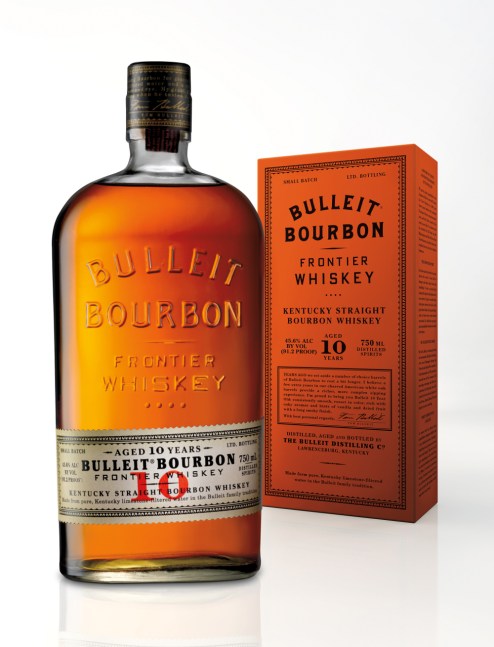
Bulleit 10 Year Old Bourbon Review

Bulleit 10_Bottle and box

Bulleit bourbon is one versatile whiskey.  It’s great neat, but its high rye content makes it outstanding in cocktails.  Best of all, it’s a solid buy for about $25-$30.  In 2013, Bulleit Distilling Company unleashed a version of Bulleit bourbon aged 10 years, which is about 3-4 years older than their standard Bulleit bourbon, and considerably more expensive ($45).  How does the extra time in the barrel change things?  Is it worth the extra cash?

(Bulleit Distilling Company provided a small sample for this review).  Where Bulleit bourbon is dry and spicy, its 10 year old sibling Bulleit 10 is a bit more balanced.  On the nose there’s some oak along with spice, vanilla, and a little caramel.  It’s nice.  Taste-wise, I don’t get the alcohol kick I expected at 91.2 proof.  Much less of a kick than its younger brother.  There’s a nice balance of oak and spice, with a little vanilla and caramel.  The finish is a little spicy and sweet, but doesn’t stick around too long.

Overall Bulleit 10 is a tasty, balanced bourbon.  It lacks the big spice of its younger sibling, but evens things out with a little oak.  The whiskey in this bottle is highly recommended, even at $45.  My only gripe is the price.  It’s about $15 more than standard Bulleit bourbon… a fantastic bourbon in its own right.  Bulleit is the better value, but Bulleit 10 is the better bourbon.

8.5/10

Lost Prophet Bourbon Whiskey Review

Orphan-Barrel_Lost-Prophet-Bottle-Shot_Lo-Res

Orphan Barrel’s fourth release, Lost Prophet, is the newest bourbon in their line of highly aged bourbon.  This one follows 20 YO Barterhouse, 26 YO Old Blowhard and 20 YO Rhetoric.  Lost Prophet is a 22 year old straight bourbon whiskey.  Unlike its siblings which were distilled at the Old Bernheim or New Bernheim distilleries, Lost Prophet was distilled in 1991 at the George T. Stagg Distillery (now the Buffalo Trace Distillery).  The mash bill for Lost Prophet Whiskey is 75-78% corn, 7-10% barley and 15% rye.  So, how’s it taste? (Diageo provided a sample of Lost Prophet for this review)

Wow!  For a 22 year old whiskey, I expected tons of oak.  Instead I got some slightly burnt caramel, some oak (it IS 22 years old after all), leather, honey and butterscotch.  There’s a soft entry on the palate.  That means pretty easy sipping at 90.1 proof.  There’s some caramel, followed immediately by some cinnamon and nutmeg spice.  Oak is there, but kept in check for the age.  There’s a slightly creamy character with this one too.  Last but not least, there’s some vanilla on the back end.  The finish is long, spicy and sweet, with a honey note left over.

Bottom line:  Lost Prophet has made me a believer.  This whiskey far surpasses Barterhouse, Old Blowhard & Rhetoric as leader of the pack.  There’s much more balance in this than Old Blowhard and Barterhouse – not too sweet and not too spicy.  A bottle of this should run about $120.  If you’ve got the cash, pick this one up.

9/10