Dewar’s White Label Scratched Cask Blended Scotch Whisky Review

Photo courtesy Dewar's

Photo courtesy Dewar’s

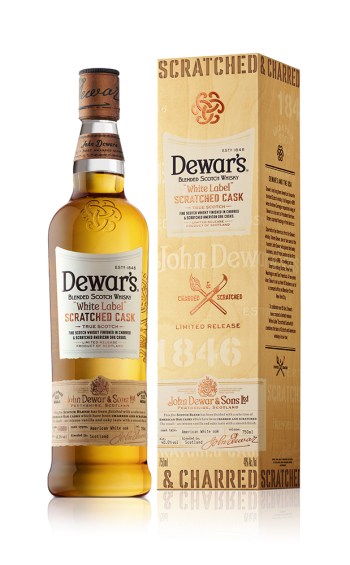
Dewar’s latest expression is their Scratched Cask blended scotch whisky.  For this one, Dewar’s takes their matured White Label whisky and finishes it in charred and scratched American oak casks for several months.  The barrels are a blend of virgin and ex-bourbon casks.  It’s bottled at 40% abv and retails for about $25, just a couple of dollars more expensive than the standard White Label.

The nose is unmistakeable Dewar’s White Label, with an added richness.  Honey, heather, and vanilla show strong.  Taste-wise, Dewar’s Scratched Cask delivers just what I expected – a slightly sweeter version of their White Label.  Honey, malted grain, and heather. The finishing casks add some vanilla and just a touch of barrel char on the backend.  The official tasting notes call for oak, but it comes across as char to me.  The finish has a touch of spice (probably brought on by the charred casks), and is slightly longer than the White Label.

I like what Dewar’s is doing here.  The charred and scratched cask finish brings an added layer of complexity to what’s otherwise a light, crisp blended whisky.  They’ve also nailed the price on the head – just a $5 premium over the standard White Label.  I’d love to see a stronger version of this, maybe at 43% abv or 48% abv, but that’s just wishful thinking.  If you like Dewar’s White Label, I’m pretty sure you’ll like this one.
7.5/10
(Note: A review sample was provided by Dewar’s)

Dewar’s White Label Blended Scotch Whisky Review

Dewars White Label

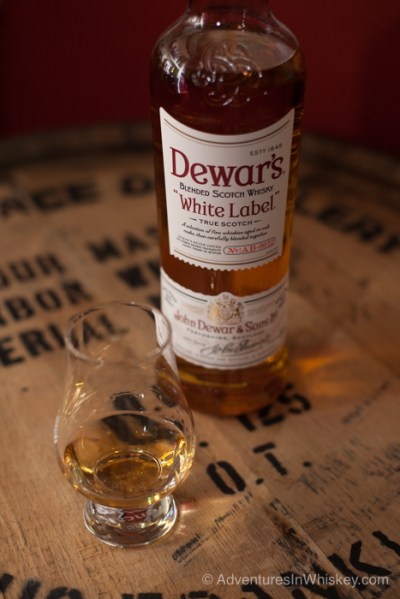
Dewar’s White Label Blended Scotch Whisky is the entry level expression for the brand.  It’s also the company’s biggest selling whisky.  Dewar’s has been around since the mid-1800s, and has been awarded numerous times.  They like to tout the White Label as “the world’s most awarded blended Scotch.”  You can find this one on just about every shelf in the $20 price range.

(more…)

Templeton Rye Whiskey Review

Templeton Rye

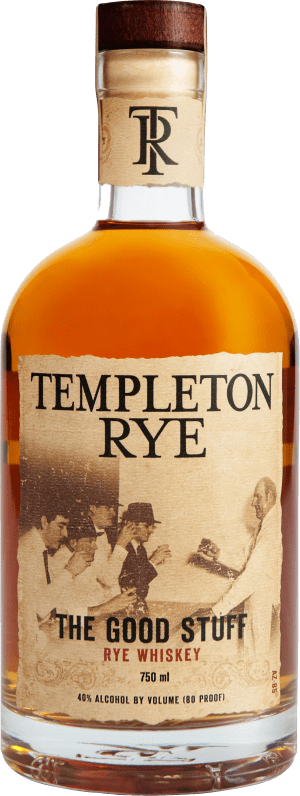
Templeton Rye whiskey as we know it today has been in the market since 2006, according to the producer’s website.  It contains no age statement, and is bottled at 80 proof.  I want to focus this review on the juice inside the bottle, but have to mention the label controversy.

In a nutshell, Templeton’s old label said it was a small batch prohibition-era recipe made in Templeton, Iowa.  That’s all fine, except the whiskey was actually distilled at MGP in Indiana.  A lawsuit was filed claiming deceptive marketing, and the plaintiffs won.  As a result, “Prohibition-era recipe” and “small batch” were removed from the label.  In accordance with the Alcohol & Tobacco Tax and Trade Bureau’s labeling laws, Templeton’s new label now states it is distilled in Indiana.  It was a long, messy journey to get them to change labels.  If you’re curious about the lawsuit, feel free to google it.

Something else of note, the label states this is a “rye whiskey” instead of a “straight rye whiskey.”  That means a very small amount of flavoring can be added to the whiskey.  Keep in mind, this is completely legal in terms of labeling.  If this were a “straight rye whiskey”, no artificial flavoring or coloring can be added.

On the nose, there’s sweet caramel followed by a strong dill note.  I usually detect this note on other MGP ryes, such as Bulleit, George Dickel or Rebel Yell Rye.  I also get a sharp black pepper note that’s usual in some rye whiskies.  Taste-wise, the entry starts with a burst of candy sweetness followed by herbal & rye grain notes and a very light touch of vanilla.  The mouthfeel feels a bit thin, but I think that’s due to the low proof.  Although it’s not rich, it does retain a smoothness.  The medium finish maintains the sweet notes.

Controversy aside, Templeton Rye isn’t a complex whiskey.  It’s not a bad whiskey, but it’s also not a great one.  It’s one I’d suggest as a mixer over a sipper.  It might make a great Manhattan or Old Fashioned.

6.5/10
(Note:  A review sample was provided by Templeton Rye.)