
Courvoisier Master Blender Patrice Pinet. Photo courtesy of Courvoisier.
Courvoisier Master Blender Patrice Pinet does not travel to the U.S. much. So when the rare opportunity to meet with him privately arose, I jumped at the chance. Pinet was in New Orleans for Tales of the Cocktail representing Courvoisier. As Pinet’s time was very limited, only three tasting sessions were made available. I was lucky to nab one of those sessions.
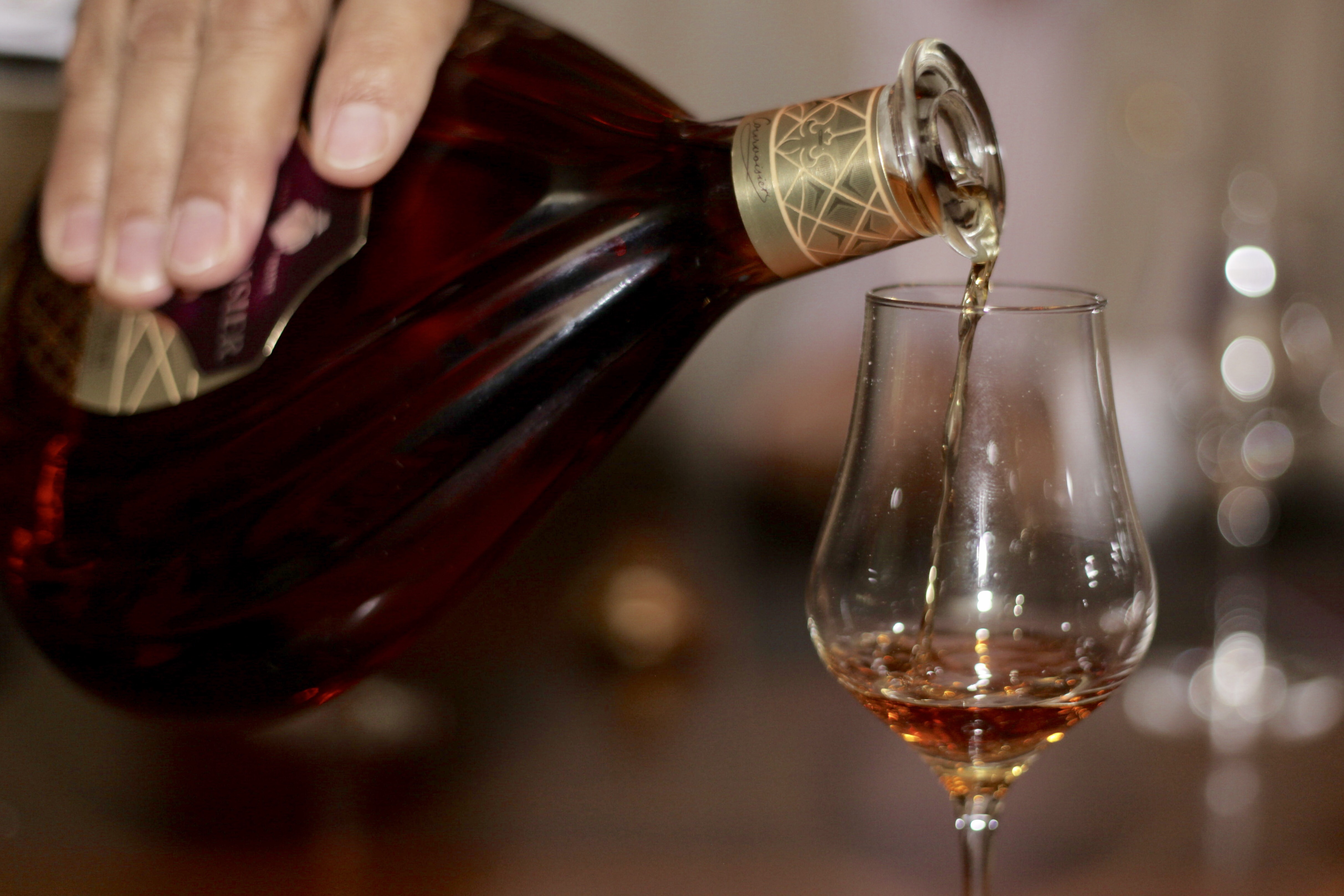
The soft-spoken Master Blender poured a taste of Courvoisier VSOP, XO and rare L’Essence as we talked cognac. On the subject of cognac and cocktails, Pinet called it “a very interesting period of time where we are rediscovering cognac.” The spirit was used in punch back in the day, but it wasn’t called cognac. At that time, the spirit we now know as cognac was referred to simply as brandy from the Cognac region. The regulations that define cognac were put in place much later. Remember, all cognac is brandy, but not all brandy is cognac.
“There is no crime to dilute or use cognac in a cocktail,” Pinet said. “Back in the 1950s, people drank cognac fine à l’eau, which means cognac and sparkling water.”
In terms of modern cognac-based cocktails, Pinet compared the French spirit to cuisine. “If you want to prepare a meal in an established restaurant, you need to have a very good ingredients to have a very good meal,” said Pinet. “To make a very good cocktail, you also need good ingredients. With Cognac you have a very good ingredient. It’s very aromatic. There’s something about cognac that combines very well with fruits and liqueurs. Mixologists can play with cognac very well.”
Making cognac shares similarities with whiskey-making, but they are worlds apart. Whiskey comes from grains, which are pretty much the same year-to-year. Cognac, on the other hand, is made from wine. The grape harvests are different every year. Pinet explained, “To have a very sustainable quality, it is very important to blend different years. Otherwise you’d have too much variation from one year to another.”

I asked about the blending different crus, or sub-regions, in Cognac. “We obtain different wines, and depending on soil, it gives the possibility of different taste profiles. There is very chalky soil in Grande Champagne and Petit Champange. A little bit less chalky in Fin Bois or more flint in Borderies,” said Pinet. “It depends on what I want to do. If I want to do something very floral, like Courvoisier VS, I like to use Fin Bois. Fin Bois is very good after just two years of aging. We do not like to distill Fin Bois with the lees (residue yeast from wine-making). We eliminate them for the Fin Bois in order to have something very floral and very fruity. This is my favorite cru to make a young cognac. When I want to do higher quality blend, I use Grand Champagne as a base. The richness in Grande Champagne is very interesting. We like to add a touch of Borderies in the higher quality blends to give some spiciness and floral notes like violet or iris. It is not a lot. I would say maybe 10 – 20% Borderies.”
All cognac must be aged in French oak casks. In addition, Courvoisier, along with most cognac producers, utilize both dry cellars and damp cellars to store their cognac-filled casks.
“When you have a dry cellar, there is more evaporation of water. There is more concentration of alcohol, making the spirit dry. In a humid cellar you have more evaporation of alcohol. You have more smoothness. That’s why it is important to have both types of cellars. You need to have the balance.”
Courvoisier is one of the world’s largest cognac producers, so consistency in their product lines is of utter importance. Their eight person tasting panel tastes daily for quality and consistency, but Pinet says their knowledge and experience makes the process or manageable.
“I would say that for a Master Blender, the easiest thing to do is a limited edition. You make a batch that’s unique and that’s it. To have a very consistent blend, it’s much more challenging. You need to play with different cru and different ages. We have a standard recipe, but this recipe has to be adjusted. We know that Courvoisier VS, for instance, we have about 85% Fin Bois and 15% Petit Champagne. From year to year we move a little bit. Our VS is aged from two to seven years, so we play with different years to have a very consistent quality.”
Lastly, I asked about the possibility of a high proof cognac. Pinet smiled and said, “If there is a demand from mixologists to use a cask-strength cognac in order to have a lot of aroma and a good basis for cocktails, it is something we would look at.”

Photo courtesy of Courvoisier.
As for the cognacs we tasted, you can find my review of Courvoisier VSOP and XO
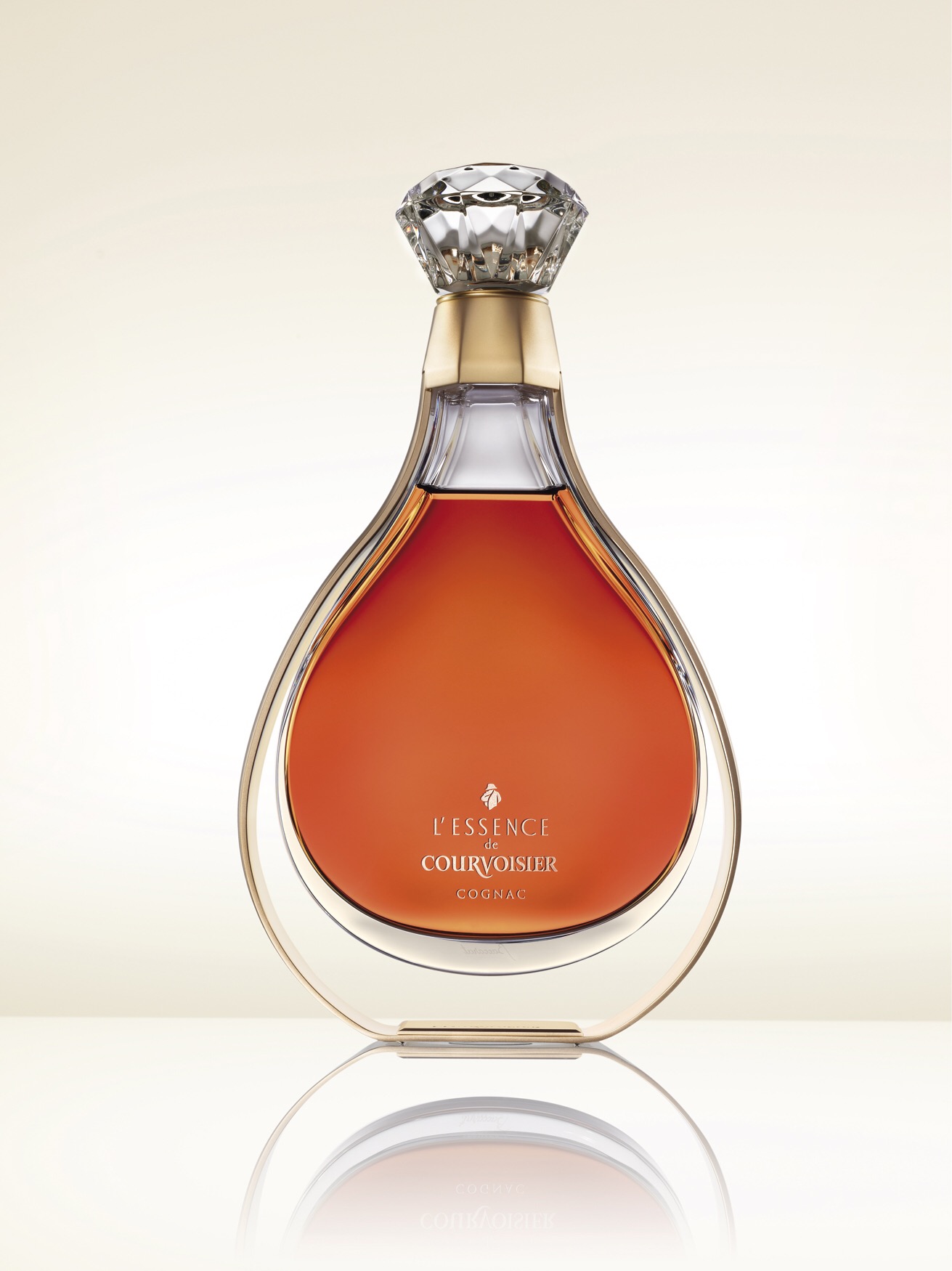
here. The last pour, L’Essence de Courvoisier, was heavenly on the nose and refined on palate. Rich dark toffee, dried fruits, and leather filled the nose alongside light floral notes. The palate carried over more of the same, with a touch more on the fruitier side. I remember plum and herbs on the finish. This cognac was made using Grande Champagne and Borderies dating back to the early 1900s. Exquisite!
I want to thank Courvoisier for the chance to speak with one of the great blenders in the spirits industry. The best way to learn about a brand is to drink their spirits. But learning from the person who actually blends said spirits is enlightenment on a whole other level.


 Adventures In Whiskey