Diageo

Lagavulin 1991 Single Cask Whisky Review

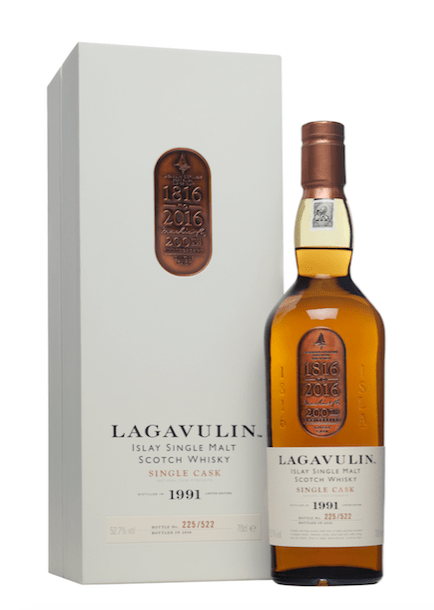
lagavulin-1991_bottle-and-box

Image courtesy: Diageo

In 1816, Lagavulin began legally distilling whisky on Islay.  Two hundred years later, the distillery released three limited edition whiskies to celebrate their important bicentennial.  First a lovely 8-year-old Lagavulin hit the market, a ode to the whisky famed writer Alfred Bernard tasted when he visited the distillery in the late 1800s.  Then a tribute to Lagavulin’s distillery managers was bestowed among us, an exquisitely crafted 25-year-old Lagavulin that was matured exclusively in ex-sherry casks.  It turned out to be my favorite whisky of 2016.

Now, the third and final 200th anniversary release of Lagavulin is a single cask bottling, distilled in 1991.  It’s the rarest of the three releases, with only 522 bottles available.  It’s also the priciest, costing roughly $1860 a bottle.  The best part?  In a classy move, Lagavulin owner Diageo is donating all proceeds from this release to various Islay charities.

This Lagavulin bottling won’t be available in stores.  You have to head over to The Whiskey Exchange and sign up for a lottery by February 12th, so go there now if you’re interested.  Entrants will be picked randomly for a chance to buy a bottle. 

Still undecided?  Trust me, it’s a killer.  The nose on this cask strength beauty (52.7%) is full of juicy tropical fruit (especially pineapple), campfire smoke, toasted barley, and burnt orange peel, with hints of dried fruit and leather in the background. A little airtime reveals lovely toffee notes.  The palate is quite the stunning kaleidoscope of flavors.  An initial burst of citrus and brown sugar lend to slightly tame peat smoke, mulled wine, spice and some herbs.  “Beef brisket slow cooked over a wood fire” paints a rough picture.  Soon after, hints of leather, sherried fruit and oak spice show through.  The long, satisfying finish has smoked sherried fruits, followed by slightly astringent oak tannins and a final refreshing mint note.

Like I said, killer.  Not everyday Lagavulin releases a single cask whisky.  Fans of the distillery with deep pockets won’t want to miss this soon-to-be legendary whisky.  To those of you who end up lucky enough to own a bottle, for the love of whatever you consider holy, open this whisky and revel in its aromas and flavors.  Remember, whisky is meant to be enjoyed, not stared at.

9.5/10

Thanks to Lagavulin for the sample!  As always, all thoughts and opinions are my own.

A Chat with Dr. Nick Morgan and a Lagavulin 8yr Review

This year mark’s Lagavulin’s 200th anniversary.  Recently at Tales of the Cocktail, I had a chance to chat with Dr. Nick Morgan, Diageo’s Head of Whisky Outreach, about the three special anniversary bottlings expected this year.

Ewan Morgan and Dr. Nick Morgan at Tales of the Cocktail

Ewan Morgan and Dr. Nick Morgan at Tales of the Cocktail

“Our intent was to have a special bottling.  Special in terms of the liquid, special in terms of the pack, and special in terms of the story we can relate somehow to the anniversary,” Morgan said.  “We wanted to make this accessible to as many people as possible.”

The first of the three bottlings is an 8-year-old whisky matured exclusively in ex-bourbon American hogsheads.  “When we started looking at it, the obvious way to go would be to do a non-age bottling because that gives you lots of flexibility to produce something affordable and really nice using young casks and old casks.  That’s what Diageo does.  We know how to blend stuff.  But then we felt that if did a non-age Lagavulin, we would upset the really vocal people in the internet whisky world.  That means instead of them saying ‘this is great,’ they would complain,” Morgan explained.

So they started looking at an age-stated whisky.  “One of our archivists said Alfred Barnard tasted an 8-year-old when he visited Lagavulin distillery.  I said ‘great thinking.  That’s the story.  That’s the liquid.”

Though famed whisky writer Alfred Barnard sampled an 8-year-old whisky when he visited the Lagavulin distillery in the late 1800s, don’t expect the anniversary bottling to be the same.  Morgan explained, “we are very clear this is not the whisky Sir Alfred Barnard would have tasted because he would have got it straight from the cask.  It would probably be far more phenolic, and so on.  So it’s not a recreation, but for the anniversary I suppose it’s an homage.”

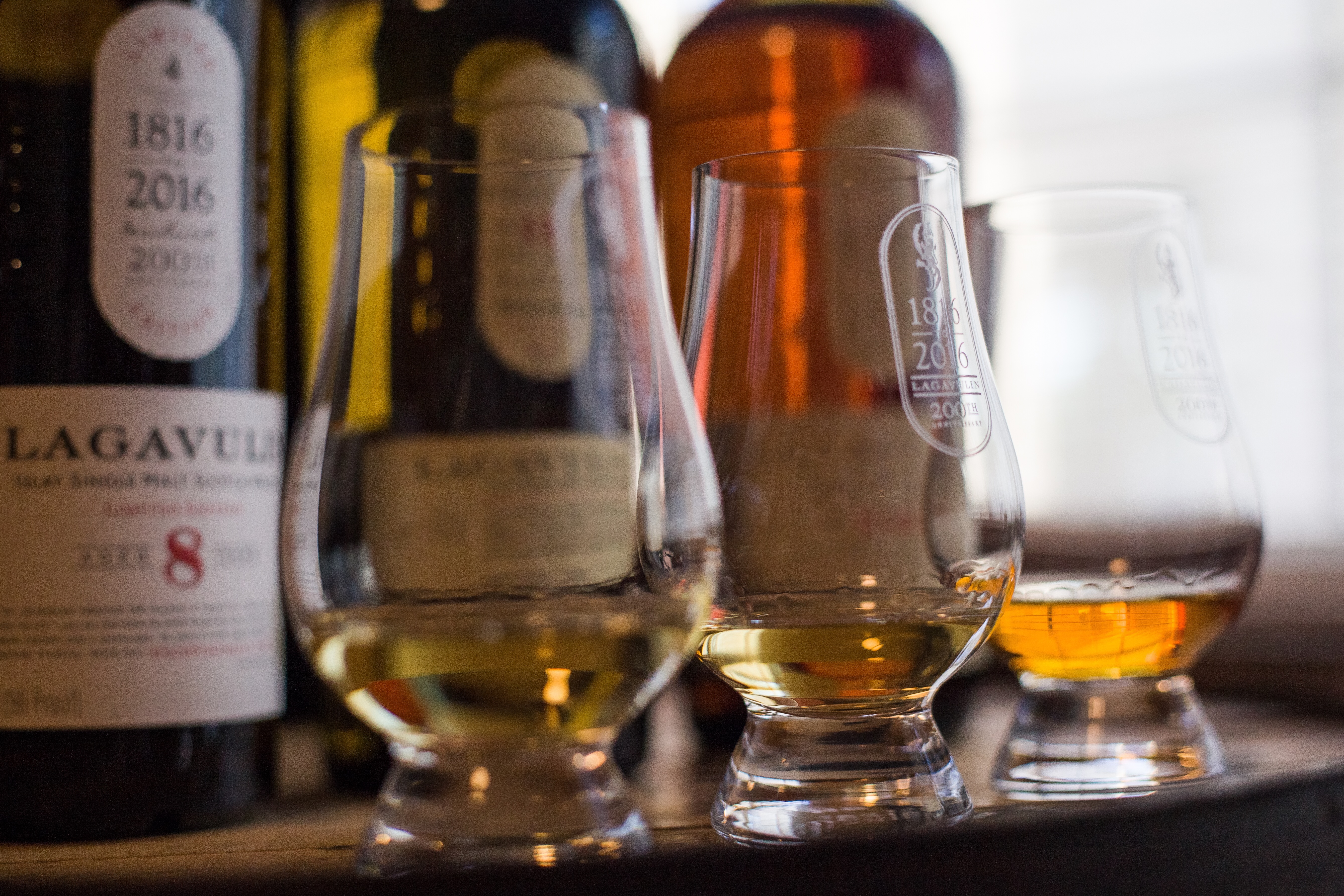
Tasting the 8-, 12-, and 16-year expressions was a treat.

Tasting the 8-, 12-, and 16-year expressions was a treat.

So how is the new 8-year old?  Watch my video below where I compare the 8-, 12-, and 16-year expressions, or read on for my full tasting notes.

The nose comes across as bright, with sweet malt, peat and orange.  There is a light touch of salted caramel.  On entry, a blast of wood smoke hits the palate, followed by a pineapple, orange, tweeted malt and a tinge of vanilla.  The finish is long, sweet and smoky.  This whisky, though smokier than the 16-year, comes across as more vibrant, giving us more of the distillery character.  It is very well made, extremely tasty, and should appeal to fans of Lagavulin.  Pick up a bottle before it disappears from shelves for good.  Once it’s gone, it’s gone.  8.5/10

Also expected this year is an already announced 25-year-old bottling, and an even rarer single cask bottling.  Dr. Morgan said the latter release will most likely be sold by one retailer with “global reach.” The single cask is drawn from a sherry butt, and all proceeds will go to Islay-based charities.  “Hopefully it’ll make a difference and leave something behind from the anniversary,” said Morgan.  This bottling is expected to cost £1816.

Thanks to Dr. Morgan for sitting down to talk Lagavulin with me.  Also thanks to Diageo for the samples of the 8- and 16-year old Lagavulin.  As always, all thoughts and opinions are my own.


Rediscovering Lagavulin

IMG_0712

I’m a lucky guy.  One of the bedrooms in my house holds most of my whisky collection.  I can’t mention that without thanking my lovely wife for putting up with my whisky blog shenanigans.  It’s a rather small collection compared to that of a lot of whisky fans/collectors, but larger than the average person has in his/her house.  Currently the count is just north of 220 full bottles (and countless smaller sample bottles).  When we have people over at the house for the first time, they ask to see the “whisky room.”  Most have the same “whoa” moment when they walk in.  Non-whisky folks always ask which is my favorite.  My answer is always the same.  “Picking a favorite whisky is like picking a favorite child.” Mind you, I don’t have kids, and everybody generally accepts my non-answer answer.

But the question does make me think about which whiskies I’d pack in the event of a fire or hurricane evacuation.  While I do have my favorites, Lagavulin never seems to make the cut.  I’ve tried both the standard 16-year-old and annual 12-year-old expressions, and loved them.  A lot.  So why do I seem to forget about Lagavulin?  Maybe I haven’t spent enough time with the brand, only having a single pour of each of the previously mentioned expressions.  After I post a whisky review, I tend to quickly move onto the next whisky.  Not that I’m complaining.  I do have the great pleasure of tasting a lot of whiskies.  Whatever the reason, I needed to put Lagavulin back on my radar.  I wanted to reconnect, and at this year’s Tales of the Cocktail, I did so in a most unforgettable way.

THE LAGAVULIN SEMINAR TO END ALL LAGAVULIN SEMINARS
img_0710

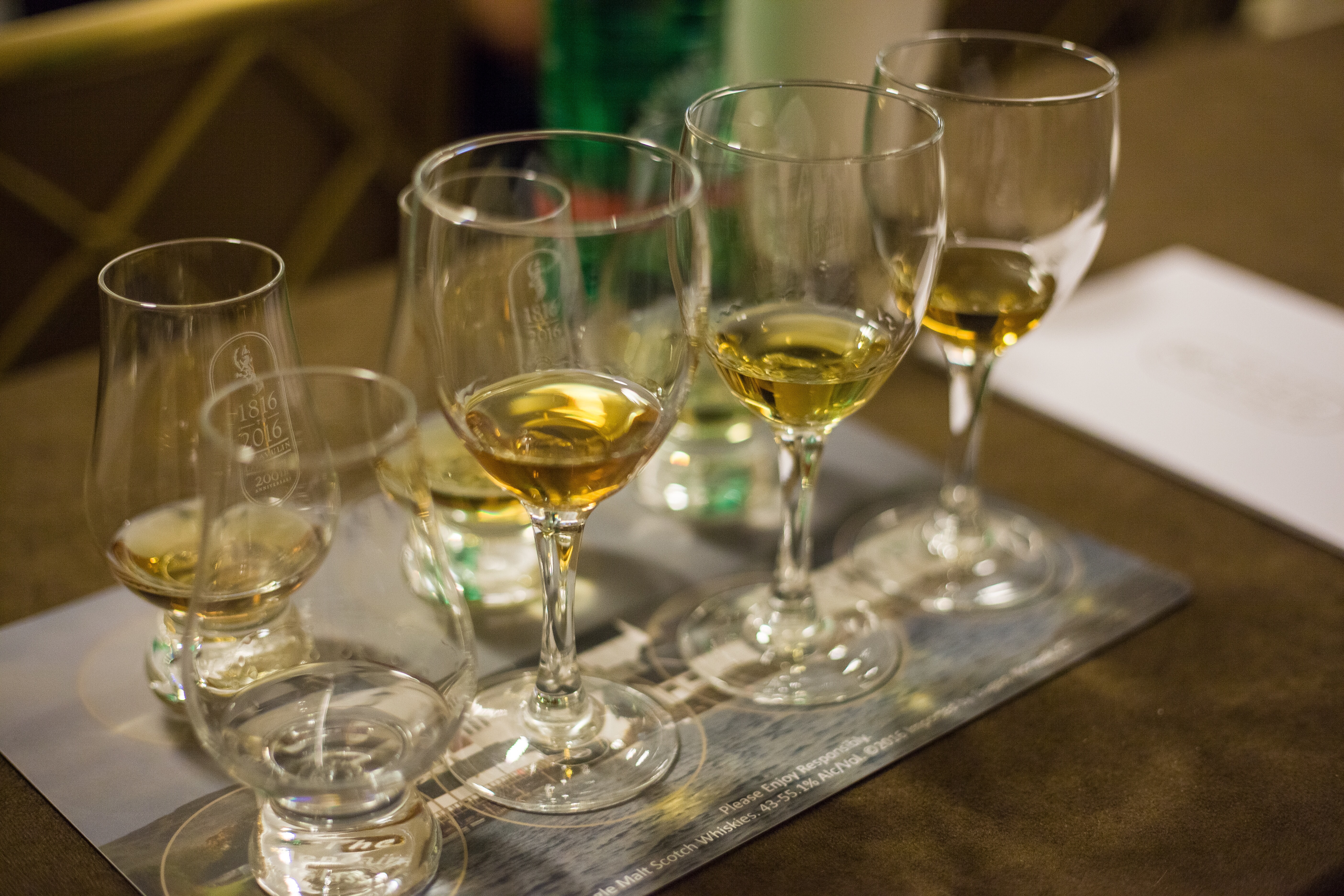
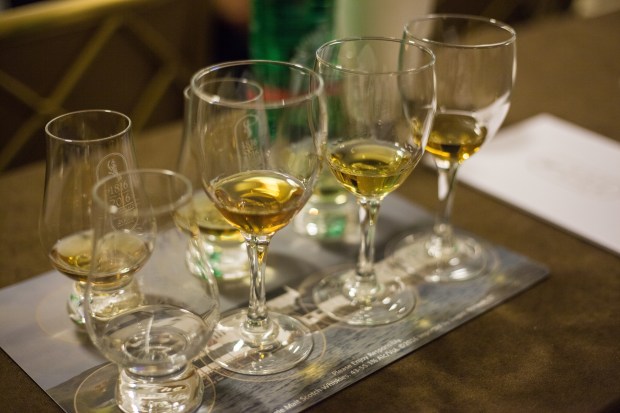
History in a glass: these are the seven Lagavulin samples we tried that day.

Led by Diageo Master of Whisky Ewan Morgan, Diageo Head of Whisky Outreach Dr. Nick Morgan and incomparable whisky writer Dave Broom, the “Ultimate Lagavulin Seminar” was both a crash course in the history of the distillery and a tasting of rare expressions of Lagavulin.  And rare they were.  We’ll get to that in a bit.
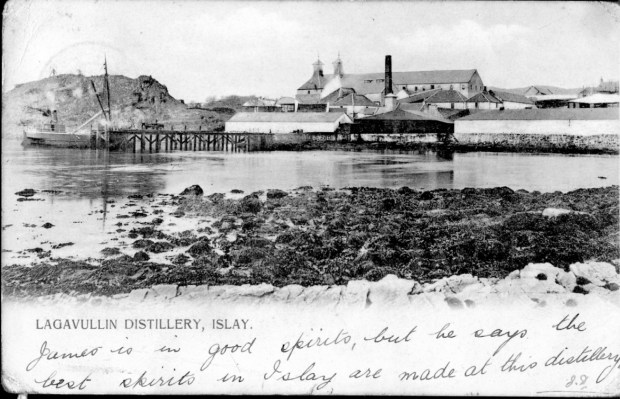
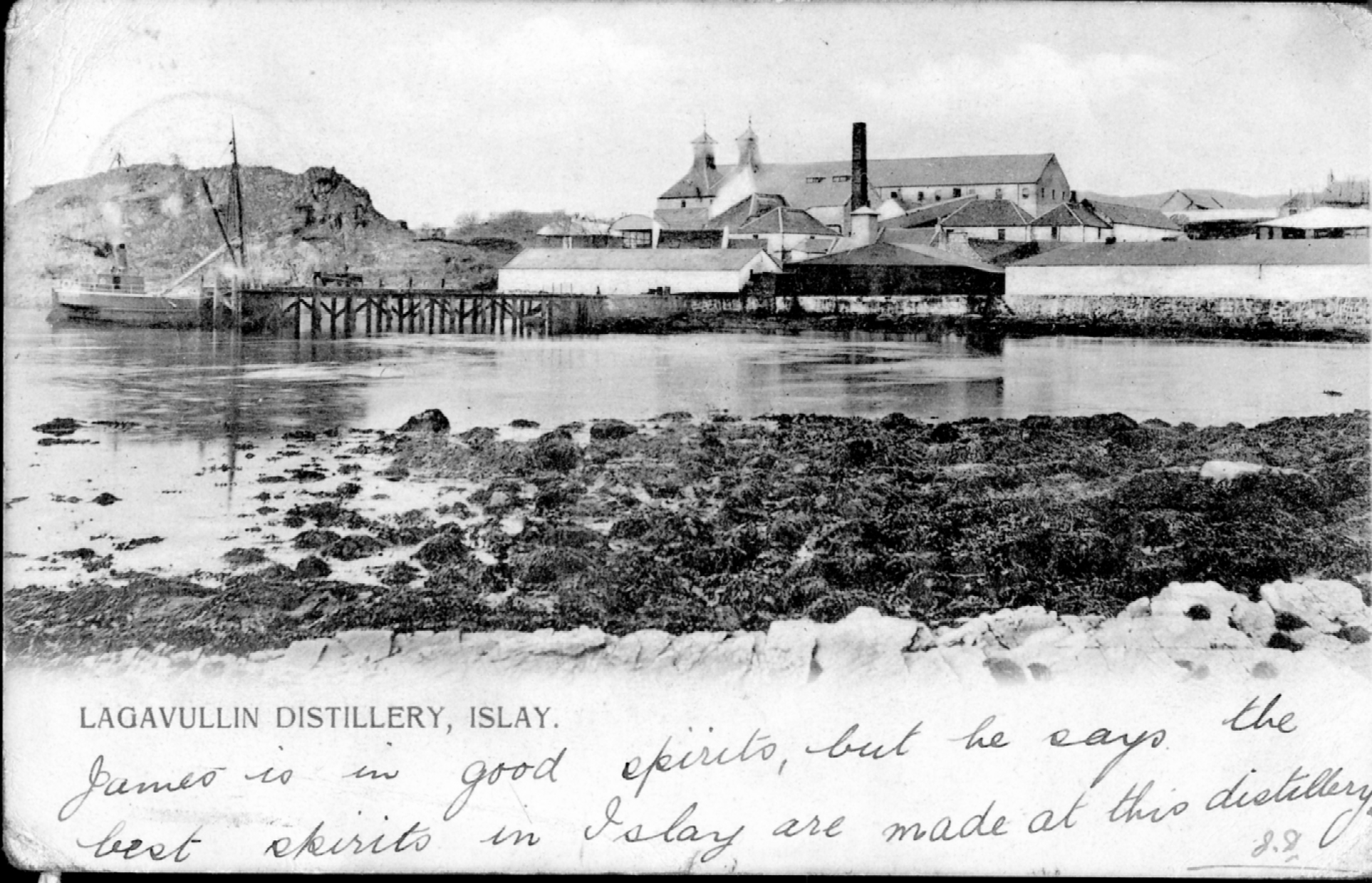
Postcard courtesy of Diageo and Dr. Nick Morgan

An old photo of Lagavulin distillery.  Postcard courtesy of Diageo

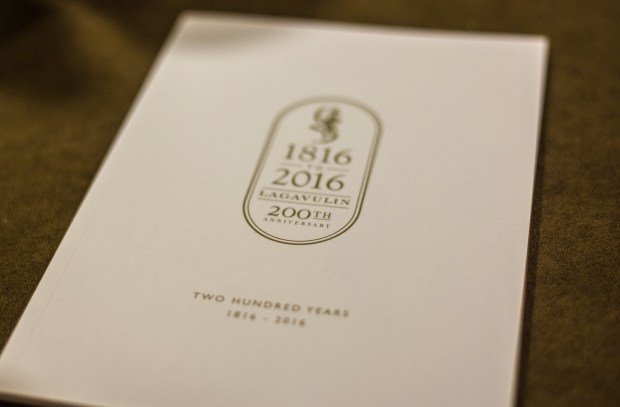
This year is the 200th anniversary of the Lagavulin distillery.  We know there were several illegal distilleries on Islay around for a couple of hundred years before that.  1816 is the date the Lagavulin distillery was registered legally, hence the bicentennial celebrations this year.  

The distillery was founded by John Johnston, but it was Mackie family who really positioned the distillery for the future.  In 1850, James Logan Mackie became partner and eventually came to own the distillery under his company “James Logan Mackie & Co.”  His nephew Peter Mackie, joined the family business and under his leadership the distillery grew by leaps and bounds.  Lagavulin still honors Mackie’s legacy to this day.  Look closely at the label on a bottle of Lagavulin and find “Mackie and Sons” signature.
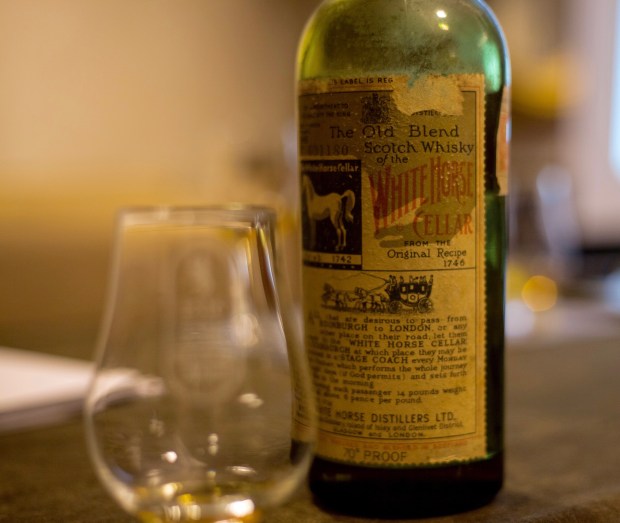
IMG_0731
During the course of the seminar, we tasted seven whiskies, some very rare.  Here’s the breakdown along with some brief notes:

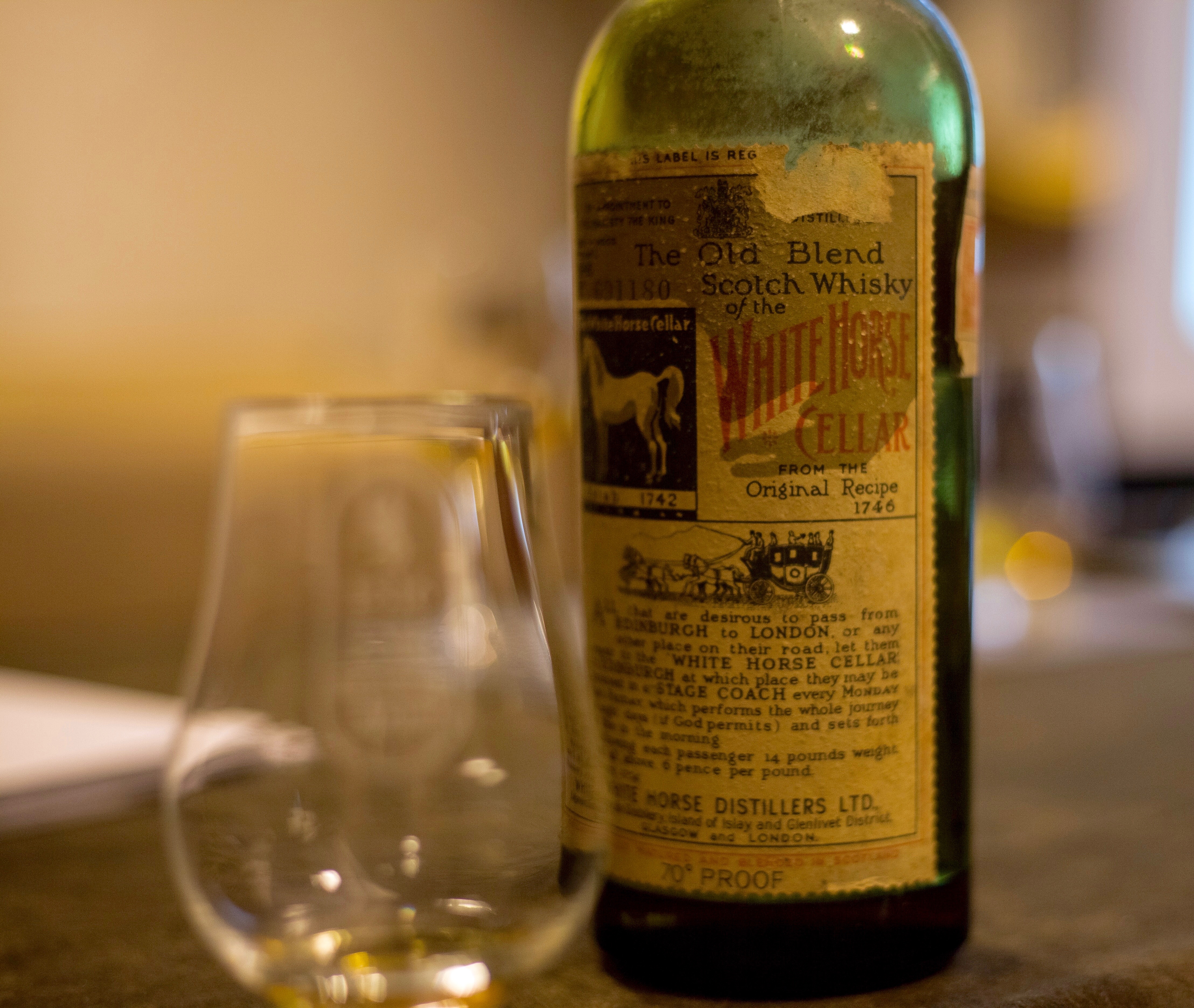
  1. 1948 White Horse blended whisky.  It was a standard blend of the day, and contained a bit of whisky from Malt Mill, a famous lost Islay distillery.  The whisky itself was pretty rich, with tropical fruit, burnt toffee and some slight minerality & a whisp of smoke.  There was slight spice on the finish.  Now this is how you start a tasting!
  2. 2016 Lagavulin 18-year-old Feis Ile (49.5% abv).  This expression matured in refill American oak casks and European casks.  I found grilled pineapple and toffee on the nose, along with a touch of smoke.  The palate carried light smoke and vanilla, along with some herbalness.  Pretty vibrant for an 18 year old whisky.
  3. Lagavulin 8-year-old (57.5% cask strength). Heavier smoke compared to the older expressions, as expected. The nose carried aromas of hay, slightly caramelized fruit and lemon zest.  Taste-wise, I found spice, lemon zest, salted toffee, sweet malt and a touch of ashy smoke.
  4. Lagavulin new make (63% abv).  Malty, smoky and hot!  Fruity, floral and smoky best describe this unaged whisky.
  5. Lagavulin 12-year-old (circa 1970s, 43% abv). Smoked mango, light toffee and a vegetal note.  It carried flavors of sweet tropical fruit, tame peat smoke, and vanilla.  Water brought out more smokiness.
  6. Lagavulin 1995 cask 3326 (45.2%). This one aged in an ex-bourbon cask and had lots of caramel and vanilla, as well as tropical fruit on the nose.  Those notes carried over to the palate alongside toasted grain and soft smoke.  In this case, water brought out more tropical fruit notes.
  7. 1976 Lagavulin 37-year-old (51% abv).  Wow.  Dark fruit, soft smoke, brown sugar on the nose.  The palate closely followed the nose, adding carmelized tropical fruit.

Seems I’ve died and gone to Lagavulin heaven.  If I had to pick a favorite, it would be between the Lag 12 from the 1970s or the 18-year-old Feis Ile release.  That 37-year-old wasn’t too shabby either.  See, I can’t pick just one.

Ewan Morgan went on to cover the production process at the Lagavulin distillery, but I was too enchanted by the drams in front of me to pay too much attention to that part.  Sorry Ewan.  Between that, the history lesson and the tasting, I get why they called this the Ultimate Lagavulin seminar.  Besides visiting the distillery, I couldn’t think of a better way to reinvigorate my Lagavulin love.

Later this week, I’m reviewing the new 8-year-old Lagavulin, and comparing it to the 12- and 16-year-old expressions.  In addition, I’ll share some information Dr. Nick Morgan provided regarding this year’s 200th anniversary releases.

Thanks to Ewan and Lia for letting me sneak into this unforgettable seminar.