Review: Barrell Whiskey Infinite Barrel Project (Feb 12, 2018 bottling)

A number of whiskey enthusiasts are creating infinity bottles. When they have a pour or two of a special whiskey left, they add it to a decanter. They quickly create their own blend, one that’s always changing as new whiskies are added.

Barrell Craft Spirits has embarked on a unique journey with its new Infinite Barrel Project, borrowing from the infinity bottle idea. To start, several different types of whiskies were batched together, including Tennessee whiskey, Tennessee rye, Indiana whiskey (finished in Oloroso Sherry butts), Indiana rye, Polish malted rye (finished in Curoçao barrels), single malt scotch, single grain scotch, and Irish whiskey.

As the company bottles a portion of the batch, new whiskies are added and left for a time to marry. The consumer will see an ever-evolving product, which should be fun to compare.

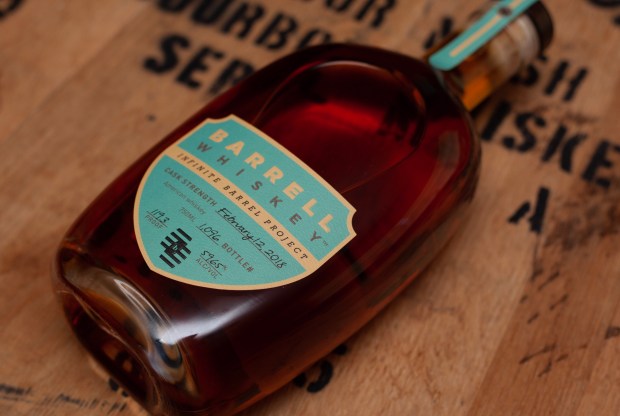
The first bottling (Feb 12, 2018) comes in at 119.3 proof. The nose is a touch closed off at first, but opens with a little airtime. Orange marmalade and pot still whiskey dominate the nose at first, followed by hints of honey, marzipan and fresh fruit. The palate is rich with fruit cake, baking spices (especially ginger), and toffee. Feint hints of candied orange peel and buttery malt appear mid-palate. The back palate sees bit of oak tannin. The long finish features lingering notes of salted caramel and red pepper.

I had a chance to sample this whiskey with Barrell founder Joe Beatrice and Head Distiller Tripp Stimson at the New Orleans Bourbon Festival earlier this year. I thought it was a unique flavor then, and it has stuck with me these past few weeks. After tasting it again, I have come to appreciate it even more. Barrell Whiskey Infinite Barrel Project stands out as a ‘must try’ whiskey, one that commands your attention upon tasting. And one that you’ll want to compare to future bottlings. Recommended! 9/10

BarrellBourbon.com

Thanks to Barrell Craft Spirits for the sample. As always, all thoughts and opinions are my own.

Be sure to follow Adventures In Whiskey on social media for more content.

IG_Glyph_Fill flogo_RGB_HEX-512 Twitter_Logo_WhiteOnBlue

Review: A batch of Nikka Japanese Whiskies

After reading Brian Ashcraft’s Japanese Whisky, I found myself in a mood to taste some Japanese whiskies.  I reached out to Nikka for help, since I haven’t formally reviewed any of their expressions on this blog.  They were kind enough to send over a few samples.

Nikka is one of the top whisky producers in Japan. In 1934, the company was founded by Masataka Taketsuru, the father of Japanese whisky.  He first built the Yoichi distillery on the island of Hokkaido.  Success lead the company to open the Miyagikyo Distillery in 1969.  The distilleries sit in two vastly different sub-climates of Japan, giving the whiskies they produce very different characters, which you’ll soon read about.

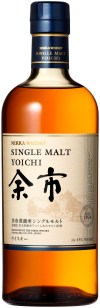
Yoichi Single Malt

Yoichi is Nikka’s first distillery, built in 1934. This NAS expression is the entry to the distillery’s single malt range. This whisky matured in new American Oak and Sherry casks, and is bottled at 45% abv.

The nose is briny, with salted caramel, stewed fruit, and a wisp of smoke. On the palate, orange marmalade complements sea weed, oak spice, toffee, and a slightly earthy note. Brine, dark chocolate and rich malt linger on the long finish.

I love the character of this whisky. It’s peated, but that peat isn’t overpowering. The slighly salty notes play really well against the richer, sweeter notes. I think I need more Yoichi in my life! 8.5/10

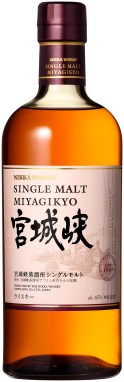
Miyagikyo Single Malt

This NAS single malt comes from Miyagikyo, Nikka’s second distillery built in 1969. It’s bottled at 45% abv and features malt whiskies matured in new American Oak casks, ex-bourbon oak, and Sherry casks.

The nose is somewhat complex, with those sherry notes slightly dominating. In the background, hints of sweet malt, citrus fruit, woody peat show through. On the palate, sherry leads, with hints of oak, cinnamon, light peat, savory herbs, and sweet malt following. The medium-length finish is features sweet, rich malt and some spiced fruit.

Miyagikyo Single Malt is nicely balanced, with a wonderfully rich mix of fruit, spice, malt and light peat. Though there is no age statement here, I can only imagine what malts this distillery can put out at 12 years or older. This is a fantastic entry to the distillery’s style. 8.5/10

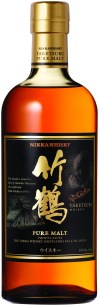
Taketsuru Pure Malt

Nikka’s Taketsuru Pure Malt features malt whiskies from both the Yoichi and Miyagikyo distilleries. The whiskies for this blend were pulled from Sherry butts, bourbon barrels, and new American oak casks. Taketsuru Pure Malt is named after the distillery’s founder, Masataka Taketsuru.

The nose is bright, with hints of fresh fruit, lemon peel, wine, and sweet malt. The entry is soft, with light butterscotch and crisp fruit, followed by lemon peel, vanilla, and oak spice. The finish is long, with lingering notes of sweet fruit juice and cinnamon.

Taketsuru Pure Malt is a rather pleasant whisky, and a great entry into the broad Japanese whisky category. It is very well balanced, which speaks to the craftsmanship behind the blend. Nicely done. 8/10

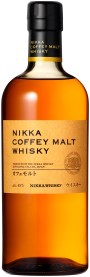
Nikka Coffey Malt

Like its name suggests, Nikka’s Coffey Malt was distilled on one of the company’s two Coffey stills at the Miyagikyo Distillery. It is a NAS expression made from 100% malted barley and bottled at 45% abv.

The whisky has a rather rich but simple nose, with hints of vanilla, sweet malt, and cinnamon. The Coffey still has given this whisky a bit of body, with hints of toffee, cinnamon, toasted oak, and some floral notes. A bit of lemon peel brightens things up. The medium-length finish is sweet, with spiced toffee.

The palate is pleasant, but not complex. Therefore, this whisky might be utilized best as a mixer. 7/10

Nikka.com

Thanks to Nikka for the samples.  As always, all thoughts and opinions are my own.

Book Review: Japanese Whisky by Brian Ashcraft

IMG_2449

While Japanese whisky is certainly experiencing worldwide popularity, it still seems rather unfamiliar with a lot of whisky fans. I get questions about the spirit all the time, and people are amazed at some of my responses. For example, people are surprised to know the Japanese have been making whisky since the early 20th century.

By the way, it’s NOT Japanese Scotch. There’s no such thing. The Japanese were certainly inspired by Scotch whiskies, but Japanese whisky is its own style.

Sigh… if only I could point people to a guide to Japanese whisky.

Enter author Brian Ashcraft.

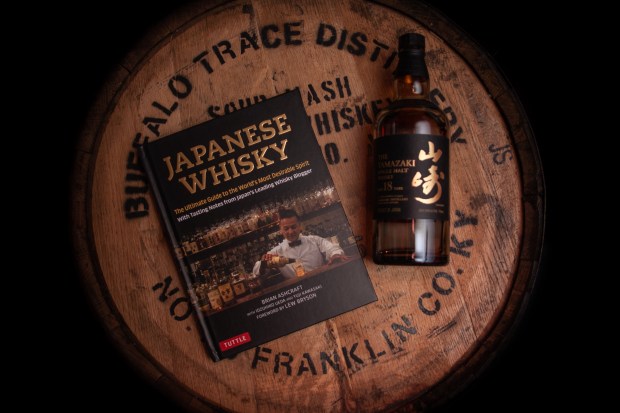
Ashcraft’s Japanese Whisky: The Ultimate Guide to the World’s Most Desirable Spirit proves to be an extremely valuable source of information. Not only does Ashcraft cover the whisky-making process in great detail, he also dives a bit into Japanese drinking culture.

Japanese Whisky starts with a history lesson, providing more than just a glimpse into the whisky’s beginnings and evolution. I find Masataka Taketsuru’s journey most interesting. Being called the “Father of Japanese Whisky” suits Taketsuru quite well. You’ll have to read to find out why. The author’s look at Mizanura oak is especially fascinating. Ashcraft explains what it brings to the whisky maturation table and why it is rather rare these days.

The next section of the book profiles major Japanese distilleries, from Yamazaki and Hakushu to Yoichi and Miyagikyo, providing tons of historical information and distillery styles. As a bonus, Japanese whisky blogger Yuji Kawasaki provides tasting notes for more than 100 Japanese whiskies, categorized by distillery.

Japanese Whisky is the Yellow Brick Road on your journey of discovery into Japanese whisky. It will guide you into a great appreciation for the spirit. A favorite chapter of mine is entitled “What Makes Japanese Whisky ‘Japanese’?”. To me, it encapsulates not only the spirit of the book, but that of the whisky and its makers. It doesn’t get more in-depth than this, folks.

Japanese Whisky will be on shelves May 2018 for $19.99.

Thanks to Brian Ashcraft and Tuttle Publishing for the review copy. As always, all thoughts and opinions are my own.