Rabbit Hole Distilling Bourbon and Rye Whiskey Review

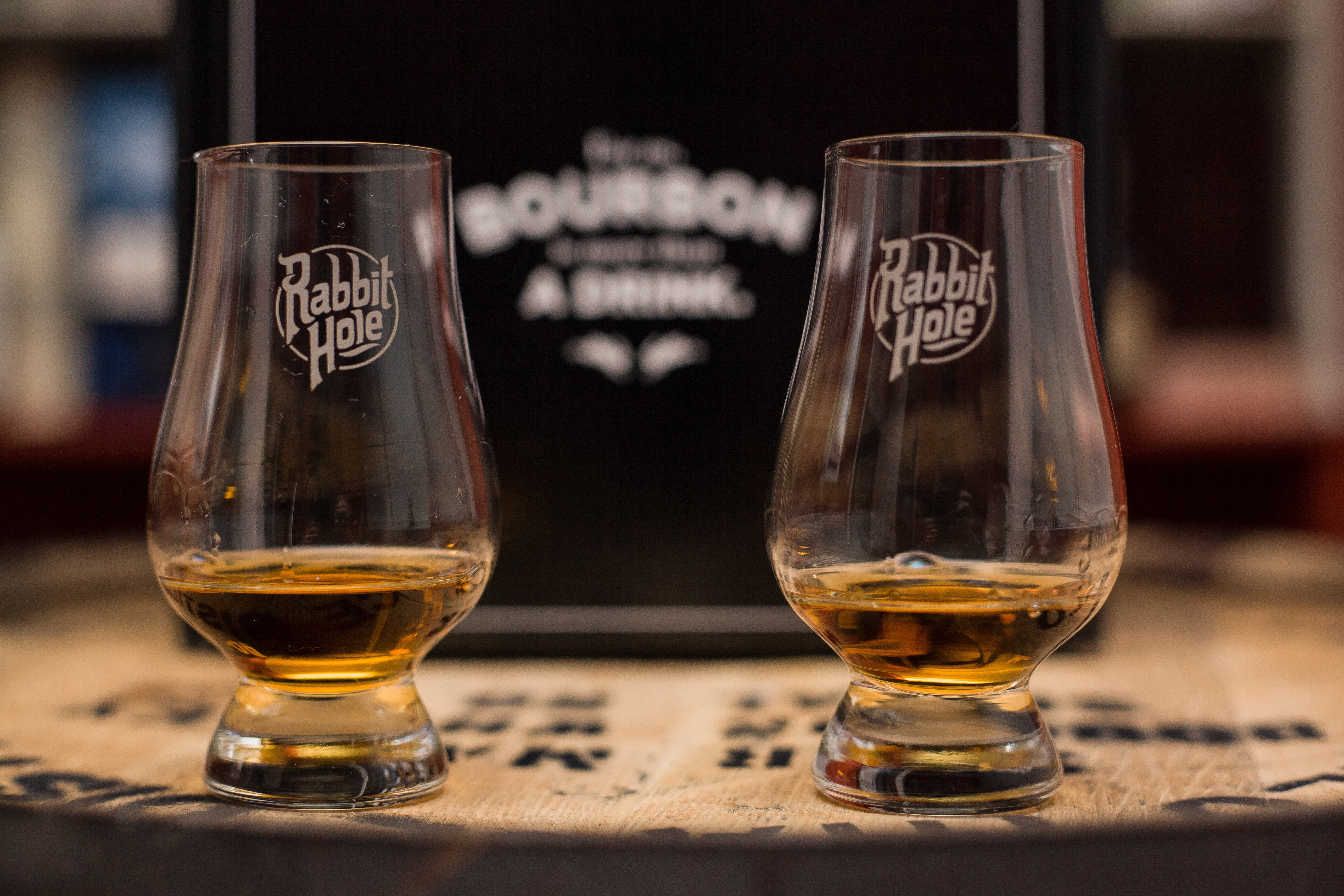
Rabbit Hole bourbon and rye whiskey.


In 2012, former psychoanlayst Kaveh Zamanian founded Rabbit Hole Distilling.  With the help of collaborators like Larry Ebersold, former Master Distiller of Seagram’s, Zamanian began production of his whiskies.  Being such an odd mash bill, it’s highly likely they contract distilled these whiskies at other distilleries.  Their own distillery broke ground last year, and should be operational by Fall 2017.  They’ve named Cameron Talley head distiller, so he’s in charge of overseeing production. 

So, how are the whiskies?

Let’s start with their bourbon.  It’s made up of four grains: 70% corn, 10% malted wheat, 10% malted barley, and 10% honey malted barley.  The entry proof, which is the proof of the whiskey as it enters the barrel, is 110 proof.  It’s lower than the industry standard 125 proof.  This bourbon has matured for 2+ years and has been bottled at 95 proof.  On the nose, there’s a “green” quality, but that’s to be expected in such a young whiskey.  I pick up hints of toffee, nuts and herbs (especially basil), along with a touch of vanilla.  The palate is rich, thanks to the low entry proof, featuring notes of honeyed grain, yogurt parfait, and caramel alongside some spice and vanilla.  The medium finish features lingering a great spiced caramel apple note. 8/10

Rabbit Hole’s rye whiskey consists of 95% rye and 5% malted barley.  That should sound familiar, as it’s one of the popular rye mash bills from Indiana’s MGP distillery.  However, this whiskey comes from Kentucky.  Like the bourbon, the entry proof here is also 110 proof.  The 2+ year age statement and 95% bottling proof also carry over.  The nose is sharp and herbaceous, with hints of toasted rye bread, dill, and light brown sugar.  Taste-wise, rye spice quickly builds up, followed closely by caramel, baking spice and Honey Nut Cheerios.  The finish is slightly longer than the bourbon, and leaves behind a mint julep (mint, caramel) note.  7.5/10

Impressive.

I like what Rabbit Hole is doing here.  Not only do these whiskies show a lot of promise at such a young age, they’re quite rich and enjoyable as is.  That said, I’m curious to see how they would taste after a few more years of maturation.  Recommended.

Sneak Peek of the Sazerac House

img_0810

Earlier today, Sazerac Company offered members of the press a preview of the Sazerac House museum.  The Sazerac House is destined to be an important visitor attraction and museum in this giant cocktail city of New Orleans.  The history of the sazerac cocktail will play a large part at the museum, but expect to see other New Orleans cocktails featured. The role of New Orleans in the history of bourbon will also be a key part.

Louisiana Governor John Bel Edwards, Sazerac Chairman Bill Goldring and Sazerac CEO Mark Brown were in attendance.

Right to left: Jeffrey Goldring, Bill Goldring, Louisiana Governor John Bel Edwards, and Mark Brown break the ground, so to speak

Right to left: Jeffrey Goldring, Bill Goldring, Louisiana Governor John Bel Edwards, and Mark Brown break the ground, so to speak

“We’ve long believed that New Orleans really is the birthplace of the cocktail,” said Brown.  “There would be those that would dispute it.  Fair enough, but I think we have a pretty good claim.  This is going to augment all of the hard work that Ann Tuennerman has been doing with Tales of the Cocktail, which by any standards has been remarkable.”

After a few words from everyone, Brown mentioned the company is burying a time capsule.  Inside is a bottle of Sazerac Rye, Peychaud’s bitters, a rocks glass, and a recipe for the cocktail.

A time capsule will be buried in the museum.

Sazerac Company is based here in New Orleans, though most of the action takes place at their award-winning Buffalo Trace Distillery in Frankfort, KY.  The company’s roots can be traced to the Sazerac Coffee House in the French Quarter back in the 1800s.  It is said that is where the sazerac cocktail was invented by Antoine Peychaud.  The Sazerac Company itself formed in 1850.

The location at the intersection of Canal Street and Magazine Street is near where the original Sazerac Coffee House stood, and in a prime tourist location. Sazerac projects 100,000 visitors during its first year. The Sazerac House will create 45 new jobs and is expected to open late 2018.

Brown also said, “New Orleans’ claim to fame with cocktails is definitely going to be cemented with this opportunity.”

And before you whiskey fans ask, I’m told there will be commemerative bottlings available at the museum.

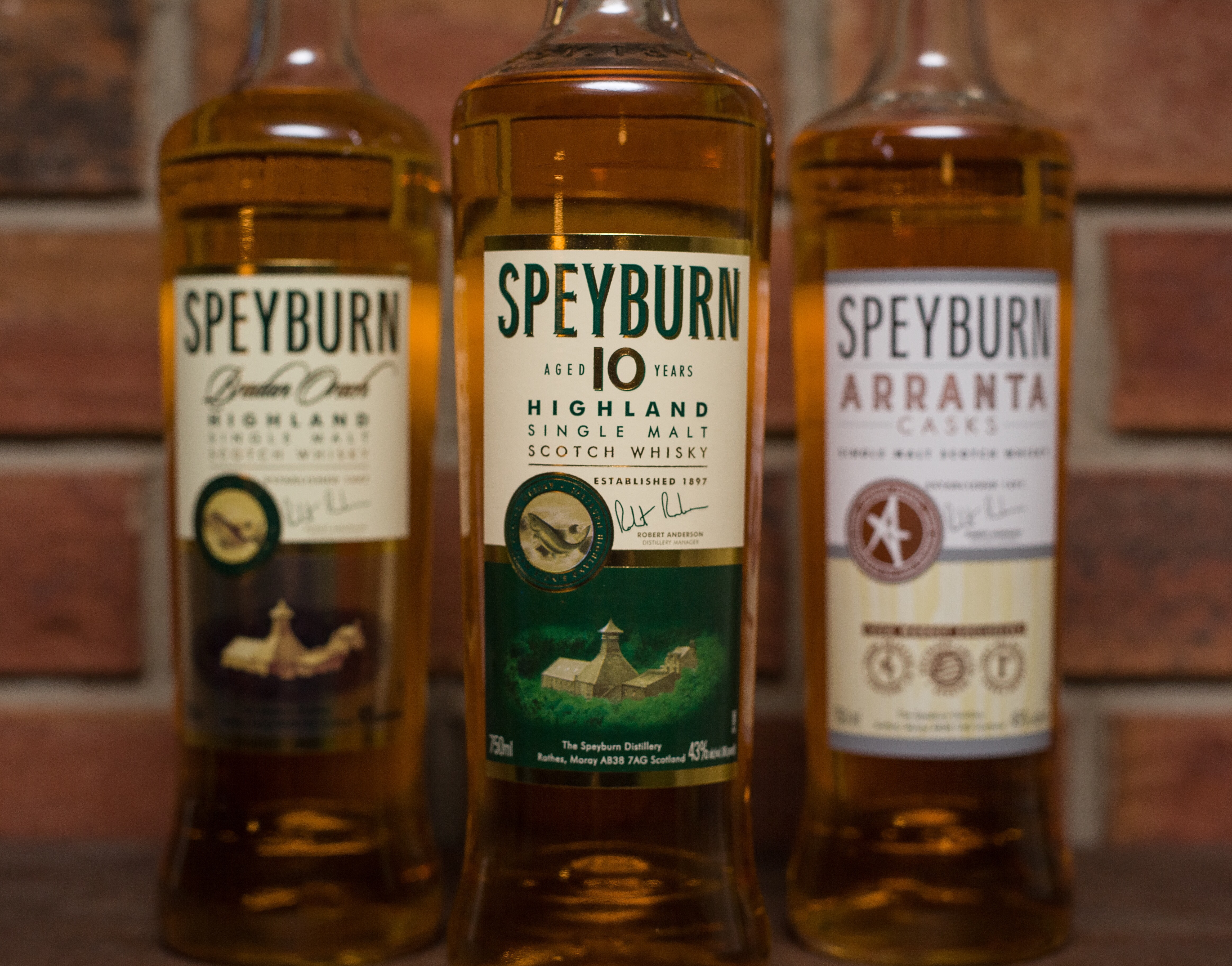
A Taste of Speyburn


Every now and then I like to sit and taste through a distillery’s whisky porfolio, and that’s just what I’m doing here with Speyburn.  Built in 1897, founder John Hopkins wanted to fill his first barrel with whisky in order to celebrate the Queen Victoria’s Diamond Jubilee. Working through some nasty winter conditions, Hopkins and team were able to fill their first barrel in December of that year, just making his self imposed deadline.  The distillery itself is located in the Speyside region.  

Speyburn isn’t that well known here in the United States, and those that do know it generally regard it as a great value pour.  The whisky coming from Speyburn is a light Highland style, so don’t look for huge peat or sherry notes here.  Their standard whisky portfolio consists of a 10-year-old whisky and two NAS whiskies, Bradan Orach and Arranta Casks.  I’ve seen the 10-year-old on the shelves of stores that have a decent whisky selection, so it’s readily available. It is a blend of American Oak ex-bourbon and ex-sherry casks.  Bradan Orach, Gaelic for “Golden Salmon”, is Speyburn’s entry level malt.  It is matured in ex-bourbon casks.  The U.S. exclusive Arranta Casks matures in first fill ex-bourbon casks.  

Speyburn 10-year-old is one of the best selling single malts in the world.  At some point it was a top ten selling malt, which may still be the case.  It’s bottled slightly above minimum at 43% abv.  My very first nosing reminded me of a less sweet Glenmorangie 10-year-old.  Both whiskies are delicate in style.  Speyburn 10yo features lightly-sweetened malt, slighty creamy caramel and a floral note.  There is also hints of sweet nectarine and spice.   On the palate, honeyed malt is complimented by hints of candied orange peel, stewed pear, pie crust, and vanilla.  The finish is a touch on the dry, slightly oaky side, and doesn’t stick around long.  Very much a light, clean whisky, and at about $25 a bottle, it’s a great value to boot!  8/10

Exclusive to the U.S. market is Speyburn Arranta Casks.  Like I mentioned before, this whisky has matured in first fill ex-bourbon barrels.  It carries no age statement, but features an even higher abv than the 10yo at 46%.  It’s priced about $40 a bottle. Those first fill ex-bourbon casks really mold the character of this release.  The nose is full of classic bourbon notes of toffee, vanilla and charred oak.  Some honeyed malt also shows through, but the richness is cut with grapefruit.  Otherwise, it’s less fruity than the 10yo.  Arranta Casks keeps a crisp flavor profile, probably due to it’s probable young age.  However, it wears its “no age statement” proudly.  A foundation of vanilla, caramel and sweet & buttery malt is supplemented by short waves of lightly-brewed green tea, orange peel, and oak spice.  That spice carries through to the medium-long, slightly dry finish.  I like this as much as I like the 10yo, albeit for different reasons.  It’s a touch drier, less fruity, and the higher proof will stand up to cocktails.  8/10

The entry level malt in Speyburn’s portfolio is the $20 Bradan Orach, another NAS whisky.  If Arranta Casks utilizes only first fill bourbon casks, my guess is there is mostly second and third fill casks here.  Brandan Orach is bottled at 40% abv and is the cheapest of the bunch.  Compared to the other two entries, this one is a bit of a disappointment.  The nose reveals a very young whisky, with sharp “green” malt, rubbing alcohol, light caramel and ripe apple.  On the palate, spiced apple, honey, and a tart citrus note slightly help mask the young malt.  The medium finish is a little sweet and mostly clean.  Rather okay-ish and without character.  With the 10 year old being such a nice whisky at a mere $5 upgrade, I see no reason to reach for Bradan Orach.  5/10

Thanks to Speyburn for the generous samples!  As always, all thoughts and opinions are my own.