Reviews

Pappy Van Winkle Tradition Cigar Review

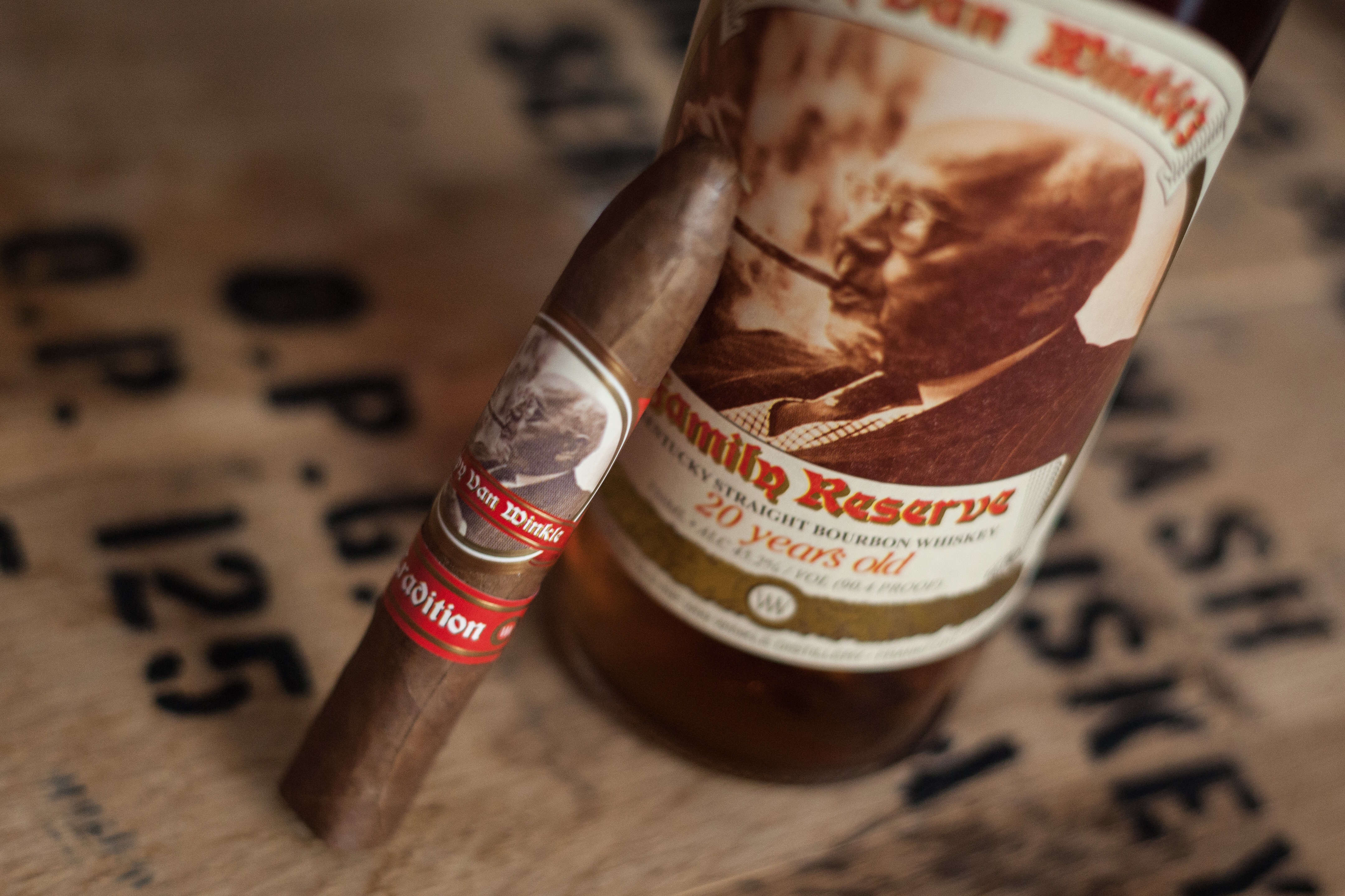
Drew Estate has once again teamed with the Van Winkles for a new cigar blend – Pappy Van Winkle Tradition.  The cigar features an Ecuadorian Habano Oscuro wrapper, Indonesian Binder and aged fillers from Nicaragua and the Dominican Republic.  As its name implies, the cigar is traditionally made, especially when compared to the previously released Pappy Van Winkle Barrel Fermented cigar.  Where that cigar is available only through Pappy & Company, the new Tradition has a limited availability at Drew Diplomat retailers.  

Tradition wasn’t initially blended for this collaboration.  Years ago when blender Willy Herrera was in talks to join the Drew Estate Family, he put together three cigar blends.  One of those blends was especially loved by everyone within the company who smoked it.  In 2016, when Jonathan Drew handed Julian Van Winkle a box of cigars featuring this blend, Van Winkle was mesmerized with the blend. With that, Pappy Van Winkle Tradition was born.

The Pappy Van Winkle “Tradition” comes in the following sizes:

  • Coronita (4 x 46) MSRP $146.00/10ct Box
  • Robusto Grande (5.5 x 54) MSRP $216.00/10ct Box
  • Toro (6 x 50) MSRP $236.00/10ct Box
  • Belicoso Fino (5 x 50) MSRP $246.00/10ct Box
  • Churchill (7 x 48) MSRP $236.00 / 10ct Box Exclusively available at Drew Diplomat Spirits Retailers
  • Lonsdale (6.5 x 44) (Not for Sale) / 10ct Box Exclusively at Drew Diplomat Rewards Events in October, November and December 2017
  • Corona (5.5 x 44) MSRP (Not for Sale) / 10ct Box Exclusively available from Jonathan Drew and Julian Van Winkle

As I took the Belicoso Fino from its wrapper, aromas of aged tobacco, vanilla and molasses hit me.  It has a great draw and features hints of cedar, molasses, raisin and vanilla, as well as a bit of spice and slight earthiness.  There wasn’t a great deal of further development the more I smoked, which was okay by me.  The flavors presented were delightful.  I generally lean towards medium-bodied cigars, and Pappy Van Winkle Tradition hit my sweet spot.  The well-constructed cigar lasted about 45 minutes or so.  The cigar is a little bit on the pricey side, but offers a superb smoke.  I highly doubt you’ll be disappointed with your purchase.

Once I had a good idea of how Tradition smoked, I was off to find a great whiskey pairing.  I first reached for a bottle of Pappy Van Winkle Family Reserve 20-year-old bourbon.  The dark, rich, and refined character that defines the famous whiskey played nice with the medium flavored cigar.  The stick’s spicy quality elevated the pairing’s overall experience while not feeling overpowering.  I especially liked that the dried fruit notes of the bourbon were enhanced as well.  Again, a beautiful pairing.

Since PVW 20-year is impossible to find, I also paired the cigar with the slightly easier to obtain Michter’s 10-year-old bourbon.  Michter’s sweet cinnamon notes complemented the cigar’s sweeter molasses and vanilla notes.  Overall, it was a nice pairing as well.  

Drewestate.com
Thanks to Drew Estate for the cigar samples.  As always, all thoughts and opinions are my own.

Laphroaig Cairdeas 2017

Photo courtesy of Beam Suntory

Mmm… Laphroaig.  It’s one of those whiskies that divides the masses.  One either loves or hates the whisky’s trademark heavily peated character.  There generally isn’t an in-between.  In fact, the brand has embraced the public’s honest assessment of their whisky with their hilarious #OpinionsWelcome campaign.  Here’s the latest spot, entitled “A First for Friends.”

Every year, Laphroaig releases a different expression under their Cairdeas (gaelic for friendship) umbrella.  The 2017 edition is a cask strength version of Laphroaig Quarter Cask.  The 57.2% abv whisky started with a 5-year plus maturation in first-fill bourbon barrels, followed by a six month secondary maturation in quarter casks.  The resulting whisky features no added color and is not chill filtered.

The nose is full of that signature Laphroaig funky Islay peat, as well as vanilla and tropical fruit.  It’s a touch more closed off at cask strength, but opens up with a splash of water, which brings about more of the fruity notes.  On the palate, it’s slighlty less sweet than the standard Quarter Cask, but packed with flavor.  Toffee, brine, and tropical fruits, especially mangos, define the whisky as much as the whallop of ashy smoke in the background.  Some young oak and herbal notes appear on the backend.  The finish is long and complex, featuring notes of vanilla cream, spice and smoke.

At a reasonable price increase compared to the standard Quarter Cask, Laphroaig Cairdeas 2017 ($80) is firing on all cylinders.  It’s younish for sure, but that allows for a larger peaty punch compared to older Laphroaig expressions.  Only 177 casks were emptied for this release, so those who want a bottle should act fast.  Recommended! 8.5/10

Laphroaig.com
Thanks to Beam Suntory for the sample.  As always, all thoughts and opinions are my own.
Collabor&tion Review

Photo credit Bardstown Bourbon Company

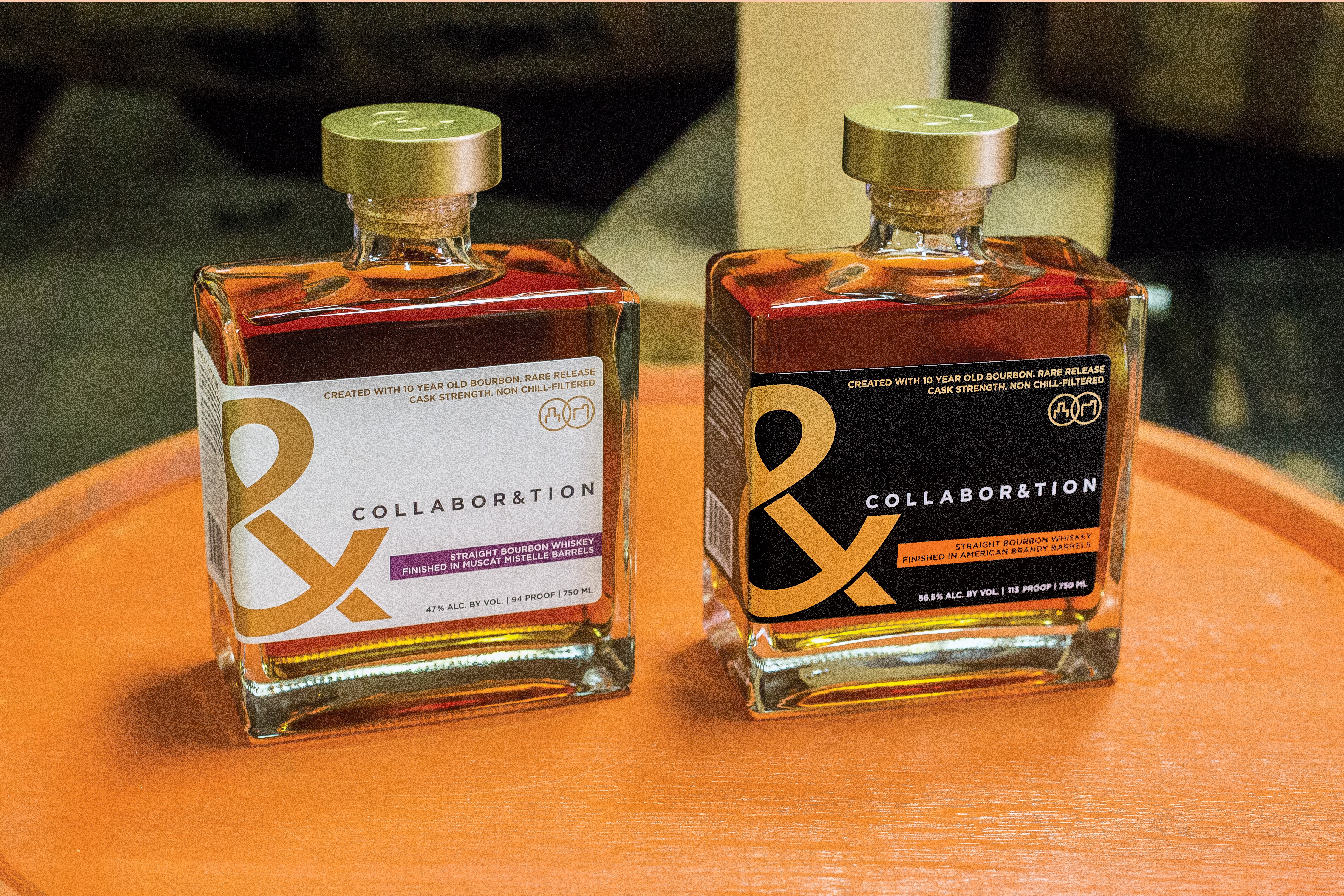
The Bardstown Bourbon Company joined forces with Copper & Kings for Collabor&tion, a limited release of two different whiskies.  Started in 2015, Collabor&tion is a project two years in the making.  Both products start with a 10-year-old bourbon from MGP.  One spends more than 18 months being finished in ex-American brandy casks from Copper & Kings and bottled at a cask strength of 113 proof.  The other release sees a similarly extended secondary maturation period in Muscat mistelle barrels bottled at a lower 94 proof.  Both whiskies are non-chill filtered.  

I’m a big fan of Copper & Kings, and MGP can produce some wonderful whiskey.  Bardstown Bourbon Company selected the barrels used for this release, and both companies worked together on the blend.

So, how are they?  In a word – fruity.  I should elaborate.

Let’s start with the whiskey finished in Muscat mistelle casks.  First, what’s mistelle?  It is unfermented grape juice fortified with unaged brandy.  The nose is full of caramelized fruit, plums, and a slightly musty quality.  On the palate, Muscat grapes permeate the bourbon’s DNA.  The whiskey’s dark caramel gives way to the dark fruits, citrus zest, and some oak.  The long finish leaves some spice, fruit and slight floral notes.

The other release, finished in ex-American brandy casks, starts with a more robust nose showcasing hints of mulled wine, brown sugar, lemon oil, and oak.  Tastewise, spice and citrus are layered on top of velvety caramel and fruit jam.  Some oak tannins make their appearance going into the finish, which brings to the forefont the whiskey’s concentrated spiced fruit character, soon becoming dry.

Here’s the thing: I don’t smell or taste anything that resembles bourbon.  The spirit’s character is completely overtaken by the barrel finishing, thus my aforementioned use of the adjective ‘fruity’.  In other words, these releases are more brandy/mistelle and less bourbon.  As they stand, however, Collabor&tion is quite delicious.  I would happily buy a bottle of the brandy cask-finished whiskey, but I would struggle to call it bourbon.  

Muscat mistelle cask-finished bourbon – 8/10

American brandy cask-finished bourbon – 8.5/10

Thanks to the Bardstown Bourbon Company for the samples.  As always, all thoughts and opinions are my own.