I’m a lucky guy. One of the bedrooms in my house holds most of my whisky collection. I can’t mention that without thanking my lovely wife for putting up with my whisky blog shenanigans. It’s a rather small collection compared to that of a lot of whisky fans/collectors, but larger than the average person has in his/her house. Currently the count is just north of 220 full bottles (and countless smaller sample bottles). When we have people over at the house for the first time, they ask to see the “whisky room.” Most have the same “whoa” moment when they walk in. Non-whisky folks always ask which is my favorite. My answer is always the same. “Picking a favorite whisky is like picking a favorite child.” Mind you, I don’t have kids, and everybody generally accepts my non-answer answer.
But the question does make me think about which whiskies I’d pack in the event of a fire or hurricane evacuation. While I do have my favorites, Lagavulin never seems to make the cut. I’ve tried both the standard 16-year-old and annual 12-year-old expressions, and loved them. A lot. So why do I seem to forget about Lagavulin? Maybe I haven’t spent enough time with the brand, only having a single pour of each of the previously mentioned expressions. After I post a whisky review, I tend to quickly move onto the next whisky. Not that I’m complaining. I do have the great pleasure of tasting a lot of whiskies. Whatever the reason, I needed to put Lagavulin back on my radar. I wanted to reconnect, and at this year’s Tales of the Cocktail, I did so in a most unforgettable way.
THE LAGAVULIN SEMINAR TO END ALL LAGAVULIN SEMINARS
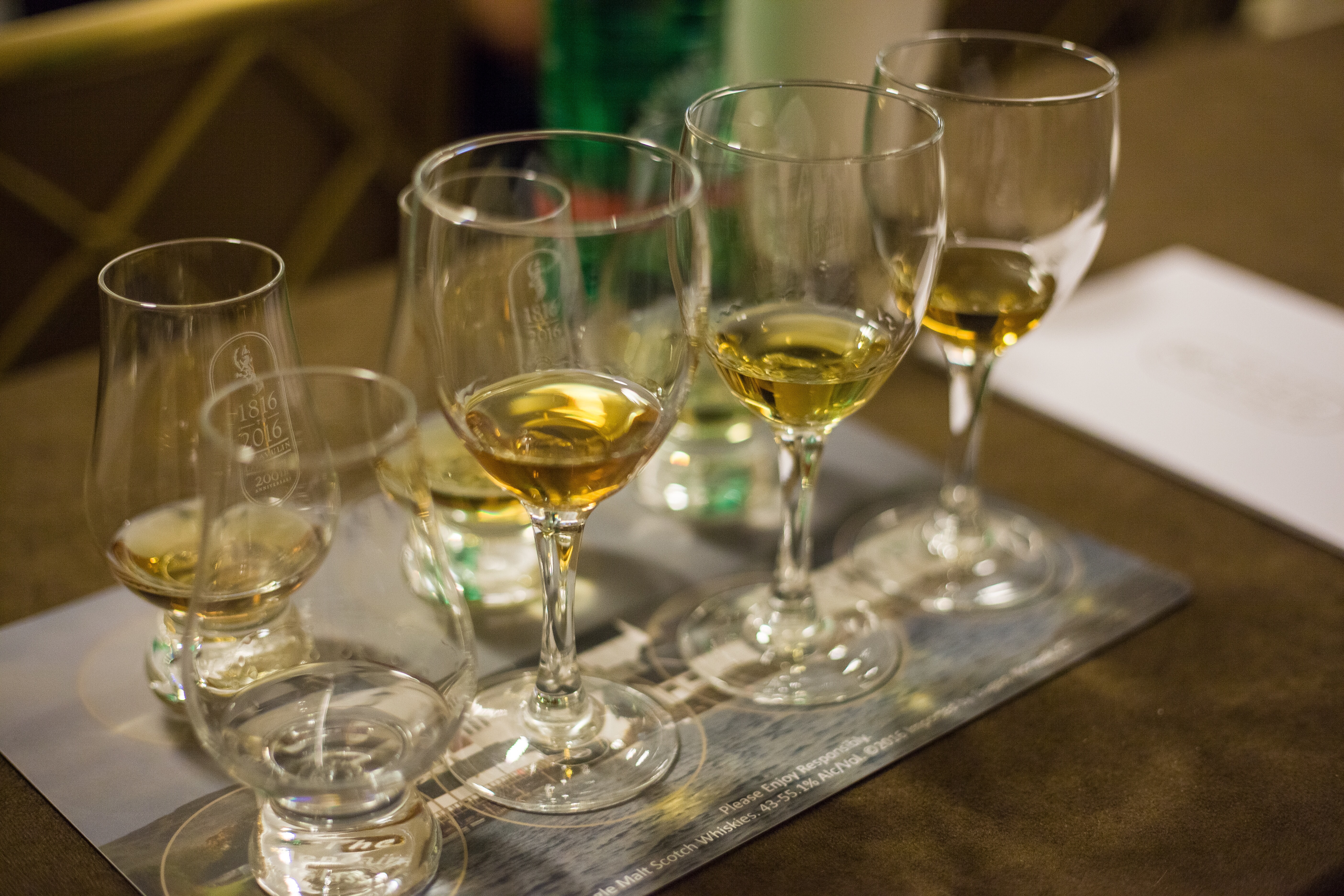
History in a glass: these are the seven Lagavulin samples we tried that day.
Led by Diageo Master of Whisky Ewan Morgan, Diageo Head of Whisky Outreach Dr. Nick Morgan and incomparable whisky writer Dave Broom, the “Ultimate Lagavulin Seminar” was both a crash course in the history of the distillery and a tasting of rare expressions of Lagavulin. And rare they were. We’ll get to that in a bit.
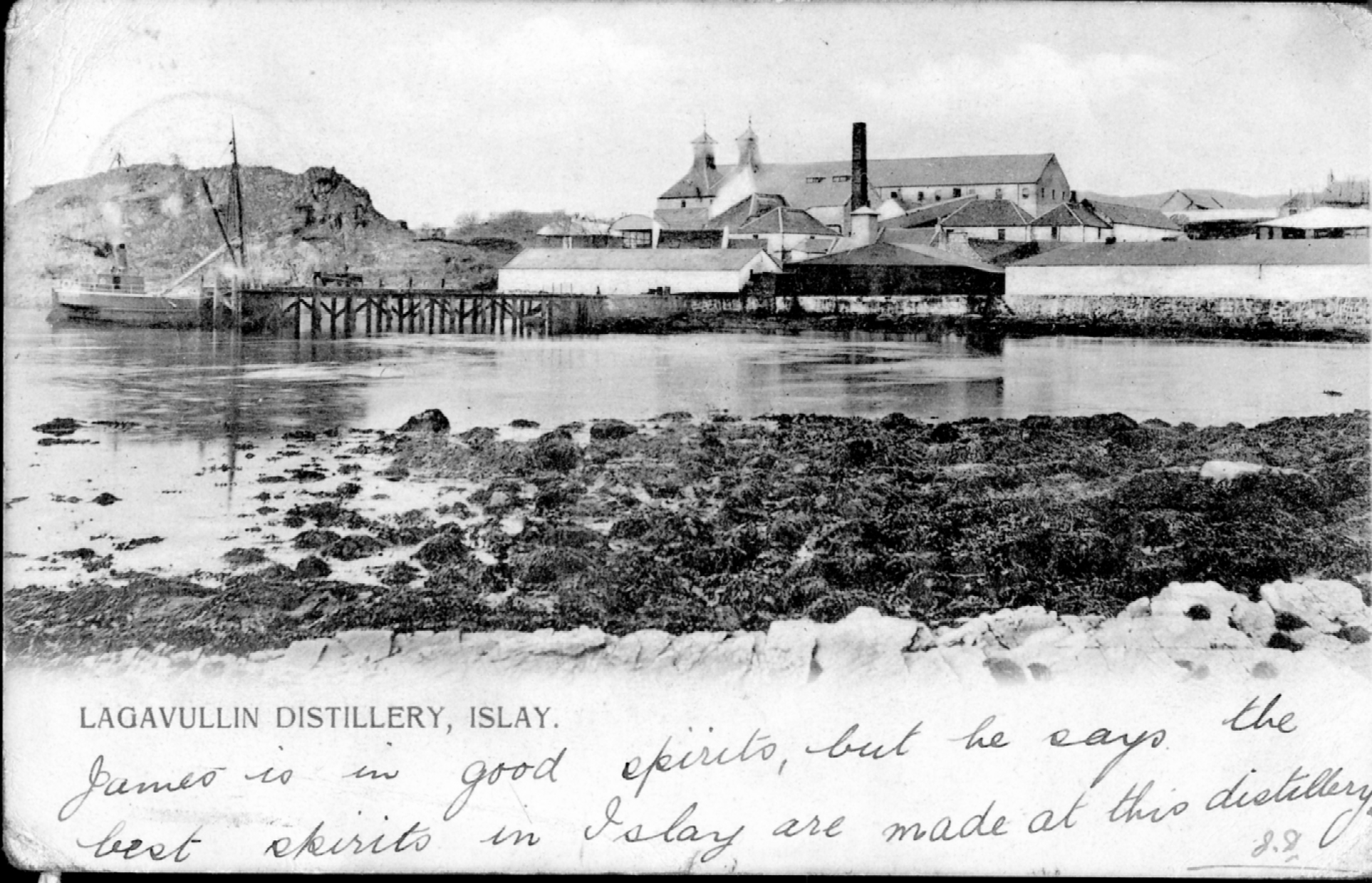
An old photo of Lagavulin distillery. Postcard courtesy of Diageo
The distillery was founded by John Johnston, but it was Mackie family who really positioned the distillery for the future. In 1850, James Logan Mackie became partner and eventually came to own the distillery under his company “James Logan Mackie & Co.” His nephew Peter Mackie, joined the family business and under his leadership the distillery grew by leaps and bounds. Lagavulin still honors Mackie’s legacy to this day. Look closely at the label on a bottle of Lagavulin and find “Mackie and Sons” signature.
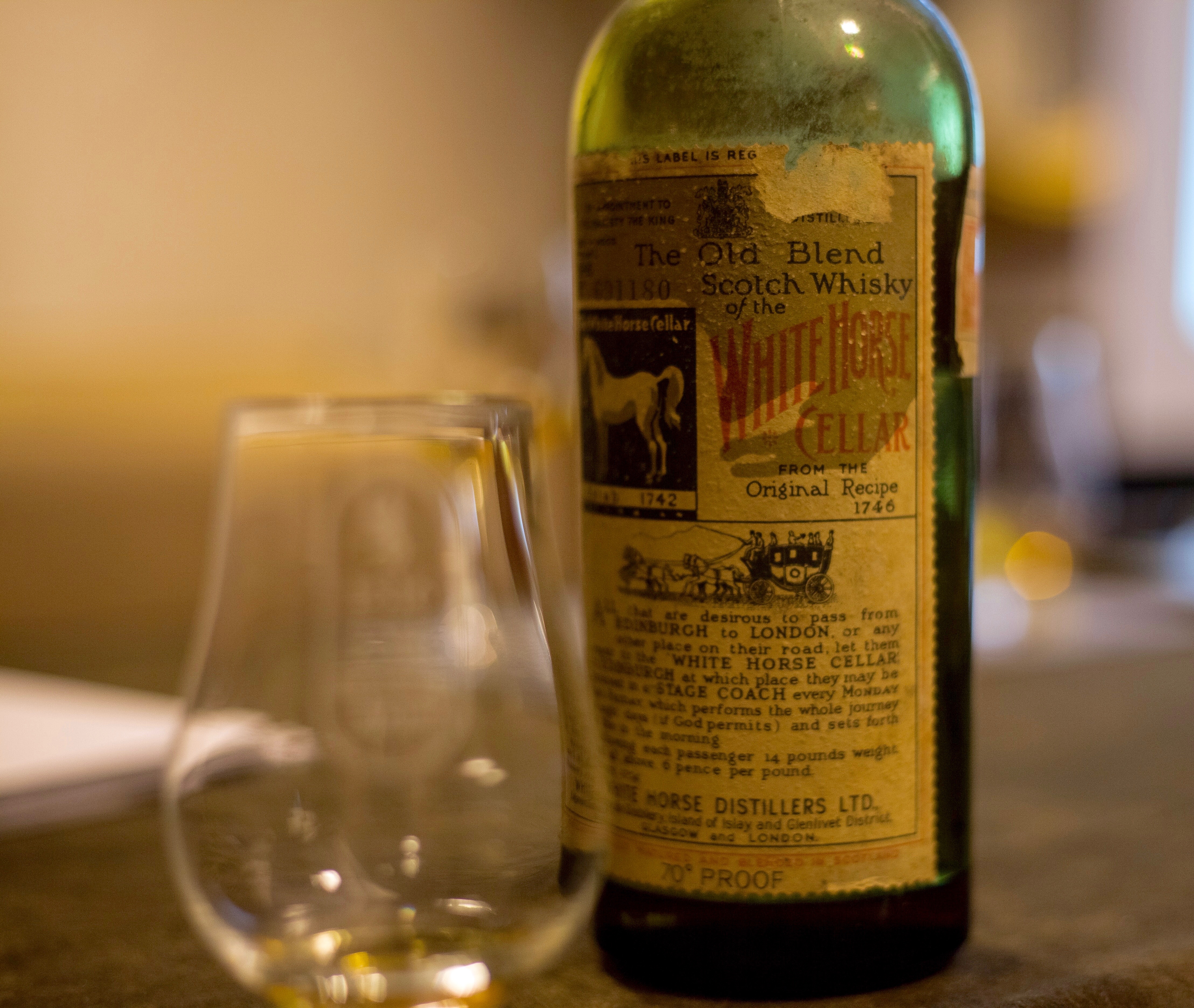
During the course of the seminar, we tasted seven whiskies, some very rare. Here’s the breakdown along with some brief notes:
- 1948 White Horse blended whisky. It was a standard blend of the day, and contained a bit of whisky from Malt Mill, a famous lost Islay distillery. The whisky itself was pretty rich, with tropical fruit, burnt toffee and some slight minerality & a whisp of smoke. There was slight spice on the finish. Now this is how you start a tasting!
- 2016 Lagavulin 18-year-old Feis Ile (49.5% abv). This expression matured in refill American oak casks and European casks. I found grilled pineapple and toffee on the nose, along with a touch of smoke. The palate carried light smoke and vanilla, along with some herbalness. Pretty vibrant for an 18 year old whisky.
- Lagavulin 8-year-old (57.5% cask strength). Heavier smoke compared to the older expressions, as expected. The nose carried aromas of hay, slightly caramelized fruit and lemon zest. Taste-wise, I found spice, lemon zest, salted toffee, sweet malt and a touch of ashy smoke.
- Lagavulin new make (63% abv). Malty, smoky and hot! Fruity, floral and smoky best describe this unaged whisky.
- Lagavulin 12-year-old (circa 1970s, 43% abv). Smoked mango, light toffee and a vegetal note. It carried flavors of sweet tropical fruit, tame peat smoke, and vanilla. Water brought out more smokiness.
- Lagavulin 1995 cask 3326 (45.2%). This one aged in an ex-bourbon cask and had lots of caramel and vanilla, as well as tropical fruit on the nose. Those notes carried over to the palate alongside toasted grain and soft smoke. In this case, water brought out more tropical fruit notes.
- 1976 Lagavulin 37-year-old (51% abv). Wow. Dark fruit, soft smoke, brown sugar on the nose. The palate closely followed the nose, adding carmelized tropical fruit.
Seems I’ve died and gone to Lagavulin heaven. If I had to pick a favorite, it would be between the Lag 12 from the 1970s or the 18-year-old Feis Ile release. That 37-year-old wasn’t too shabby either. See, I can’t pick just one.
Ewan Morgan went on to cover the production process at the Lagavulin distillery, but I was too enchanted by the drams in front of me to pay too much attention to that part. Sorry Ewan. Between that, the history lesson and the tasting, I get why they called this the Ultimate Lagavulin seminar. Besides visiting the distillery, I couldn’t think of a better way to reinvigorate my Lagavulin love.
Later this week, I’m reviewing the new 8-year-old Lagavulin, and comparing it to the 12- and 16-year-old expressions. In addition, I’ll share some information Dr. Nick Morgan provided regarding this year’s 200th anniversary releases.
Thanks to Ewan and Lia for letting me sneak into this unforgettable seminar.
 Adventures In Whiskey