
Photo courtesy of Bowmore Distillery.
Nestled on the eastern coast of Loch Indaal on Islay, Bowmore sits proudly as one of the oldest distilleries in Scotland. It was founded in 1779, making it almost as old as the U.S. The distillery is currently owned by Beam Suntory. Each batch is overseen by Master Blender Rachel Barrie.
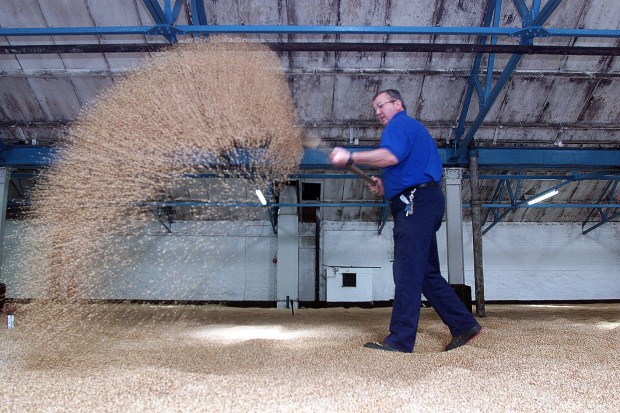
Bowmore produces a peaty whiskey, but it’s not as full and heavy as Laphroaig or Ardbeg whiskies. The distillery still manages a small amount of traditional floor maltings, but the majority of malted barley comes from the mainland.
Picture supplied by SNS Group/Peter Devlin
Their standard range includes Bowmore Small Batch along with 12-year, 15-year, 18-year and 25-year-old expressions. Let’s take a look at their expressions.
Bowmore Small Batch
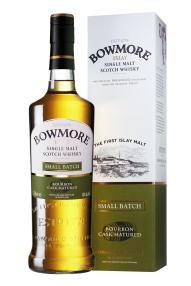
Photo courtesy of Bowmore Distillery.
Bottled at 40% and available for a suggested price of $39.99, Bowmore Small Batch is the only non-age stated (NAS) whisky in their core lineup. It’s composed of whiskies aged in first and second fill ex-bourbon casks. The nose is a tad on the younger side, and gives soft vanilla and fruit notes under a blanket of easy going peat. The peat comes across like a bandage. Taste-wise, I get a saccharine sweetness carrying spice, vanilla, and peat. A crisp citrus note shows up in the mid-palate and follows through into the medium length finish.
After a couple of tastings, I can’t get into this expression. It tastes okay, but isn’t spectacular or memorable.
My problem isn’t the lack of age statement on the label – that never really bothers me. After all, the Scotch industry is headed that way regardless, so it’s best to get on board now.
In the case of this expression of Bowmore, I think it’s a combination of NAS and low proof. A 46% abv version of this might give this whisky a much needed shot in the arm.
6.5/10
Bowmore 12-Year-Old

Photo courtesy of Bowmore Distillery.
The nose on this 12-year-old expression of Bowmore is a bit punchier than it’s younger NAS sibling. The peat is showcased more here, providing a slightly ashy smoke and iodine combination. There’s a nice honey note providing the sweetness, along with lemon zest. I best describe the entry as a “sweet bandage”. That may be the strangest tasting note I’ve ever written. There’s clover honey and smoky ash accompanied by vanilla. Mid-palate, lemon curd provides a tartness and creaminess to the tasting experience. The sweet/ashy/citrus finish hangs around for a few minutes. This is one of the few times the official distillery tasting notes are on par with my own tasting notes.
Bowmore 12-year-old is a much more refined and “complete” expression when compared to the Small Batch whisky. Sure it’s peaty, but this whisky retains a light and crisp quality I don’t normally associate with Islay whiskies. While it’s a nice dram, Bowmore 12 year isn’t one to dissect for an hour. Pour a glass, sip, and enjoy. A bottle should cost around $50.
7.5/10
Bowmore 15-Year-Old “The Darkest”

Photo courtesy of Bowmore Distillery
This darker colored 15-year-old expression from Bowmore is aged in a combination of ex-bourbon casks and ex-sherry casks, giving it the nickname of “The Darkest.” Also of note is the slight raise in proof – 43% abv.
Those sherry casks provide a nice fruitiness and richness on the nose. Dried fruits, vanilla, citrus and peat are the prominent aromas. Toffee provides the rich sweet note. On the palate, a quick hit of spice opens into a blast of orange zest and tropical fruit. The peat note is not as prevalent as it is in the younger Bowmore expressions. Again, the toffee note from the nose adds some sweet creaminess. An ashy smoke note turns up at the back palate going into the long finish.
Bowmore 15-year is my favorite of the bunch. I have a soft spot for sherried Islay whiskies. The sherry casks provide another layer of complexity that I think this whisky benefits from. It’s not as light in style as the Small Batch or 12-year-old, but that’s okay. This expression carries a $65 price tag, making it $15 more expensive than the 12-year-old. Totally worth it, as far as I’m concerned. Recommended!
8/10
(Note: Review samples were provided by Bowmore.)


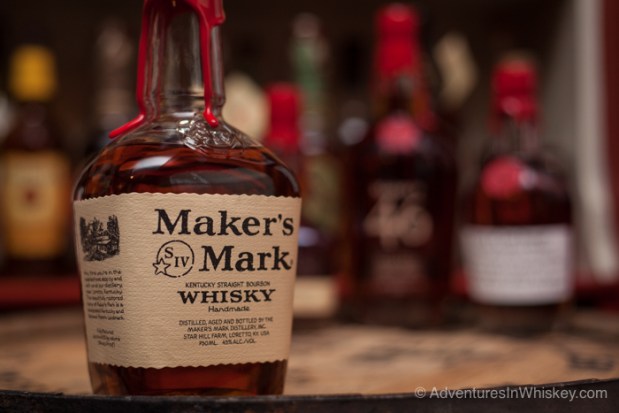
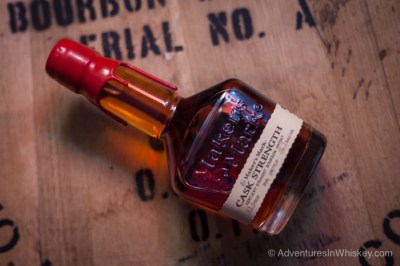 I picked it up. Several months later, MMCS rolled out across the country with full sized 750ml bottles, retailing for a suggested price of $59.99. My bottle is from batch 14-02. It’s a full strength 113.3 proof. As expected for barrel strength whisky, the nose here is concentrated. The same notes found in the standard bottling – brown sugar and vanilla sweetness – is found here, but in a more robust fashion. Also here is a small mint note I don’t find in Maker’s Mark. Taste-wise, the higher alcohol slightly tingles the tongue, but also explodes with a blast of flavors. Vanilla, light brown sugar and a bit of orange peel parade around your mouth. Like the standard Maker’s, MMCS brings about some drying oak before heading into a much longer finish. It’s warming and has a bit of a nutty and creamy caramel note. MMCS is about double the cost of the standard Maker’s Mark. It’s a much bolder bourbon, mainly because of the higher proof. I prefer it to the base expression hands down. It’s still not the most complex bourbon around, but drinking this is a much richer experience.
 After about a year and a half of experimenting with different methods of coming up with richer version of Maker’s Mark, the folks at the distillery, led by Master Distiller Greg Davis, finally came up with something they liked. Maker’s 46 is a bourbon that’s finished in a secondary barrel. Fully matured Maker’s Mark, aged between 6 and 7 years, lives a short life in a used Maker’s Mark barrel lined with 10 seared French Oak staves. After a few months, that bourbon is ready to be bottled as Maker’s 46. I like that it’s bottled at 94 proof, which is slightly higher than the standard Maker’s Mark’s 90 proof.
 The newest expression from Maker’s Mark, Maker’s 46 Cask Strength hit their distillery gift shop in 2015. Though it’s only (currently) available in 375ml bottles, Maker’s 46 CS hit the hands of enthusiastic fans to mostly positive reviews. The first batch released is 108.9 proof. With higher alcohol content comes more concentrated aromas. Where Maker’s 46 smelled like a rich dessert, Maker’s 46 CS comes across as a candied version of that same dessert. There’s a big syrupy-ness about it. Those vanilla, oak and baking spices are still present, but they are fighting through a wall of sweetness to be noticed. On entry, the higher proof provides a slightly more viscous whisky and tingles the tongue. Maple syrup and creamy vanilla lead the palate, with a drying oak note popping up towards the end of the experience. The finish here is long, with sweet vanilla, ground cinnamon and slightly drying oak.
 Adventures In Whiskey